Understanding the Impact of Terrorism: Domestic and International Threats Explained
This article explores the complex nature of terrorism, highlighting its definitions, types, and motivations. The FBI defines terrorism as the unlawful use of violence to instill fear for political or social objectives. It elucidates the relationship between hate crime and terrorism, the rise of homegrown terrorism, and the historical shift from left-wing to right-wing extremism in the U.S. It also examines the implications of the 9/11 attacks on American policies and society, discussing ongoing challenges in addressing domestic and international terrorism.


Understanding the Impact of Terrorism: Domestic and International Threats Explained
E N D
Presentation Transcript
Murderous Terror Higgins O’Brien Spring 2012
The FBI defines terrorism as “the unlawful use of force or violence against persons or property to intimidate or coerce a government, civilian population, or any segment thereof, in furtherance of political or social objective”. • Hate homicide and acts of terror are closely related, with the line between them not always clear • Often random and symbolic
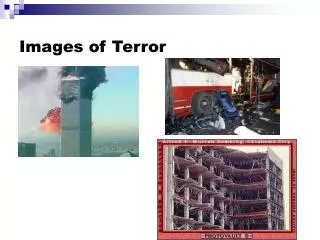
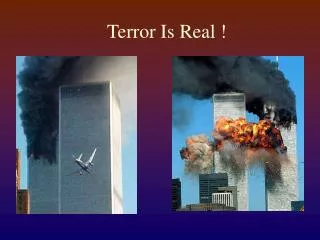
International Terrorism • The al Qaeda attack on the World Trade Center towers resulted in some 3,000 deaths, with victims from 78 different nations • Following the attacks of Sept. 11th, the United States initiated Operation Enduring Freedom in Afghanistan and expanded federal powers under the Patriot Act • 80% of Americans expressed willingness to forfeit certain freedoms for the sake of security • Currently U.S. forces are still in the region, and a modified version of the Patriot Act remains in force
Homegrown Terrorism • 2/3 of all terrorist attacks in the United States are perpetrated by citizens inside the country • Offenders have a grudge against the government, a group of people, or all of humankind • Feel frustrated and powerless to change society • Have utopian beliefs about the world • Socially isolated, and willing to kill The Unabomber Timothy Mcveigh Derrick Shareef
Prison as a Terrorist Recruiting Center and American Muslims • As of 2010, there are more than 300 terrorists in U.S. federal prisons • Some are concerned about a growing terrorist inmate population, and the prevalence of Islam in prisons • Inmates can receive training/guidance from others * However it is a mistake to assume American Muslims will side with radical religious fringe groups * In contrast to Europe, many Muslims have integrated with high salary jobs and higher education in the U.S
Left Wing vs. Right Wing Terrorists • In the 1960's-1980's most domestic terrorism came from political extremists on the left • Marxist-communists • Socialists • Puerto Rican Nationalists • These individuals tended to be young, well educated, upper-middle class, and from urban areas • Many were African and Latino Americans, and about 1/3 were women
Left Wing vs. Right Wing Terrorists Continued • Since the mid-1980's most cases of domestic terrorism have been for right wing extremist causes • White Supremacy • Against a communist controlled government • These individuals tend to be middle aged white males, lacking a college degree, and likely to be unemployed • Against minority rights • Survivalists who withdraw from conventional society • “Christian Identity”, a theological basis that believes white Christians are superior to others
Left Wing vs. Right Wing Terrorists Continued • Reasons for why the extremist right was invigorated in recent years • Federal Gun Control Legislation • ATF agents accidently kill a white supremacists' pregnant wife and young son (Randy Weaver) • FBI siege on the Branch Davidian compound in Waco, TX • Militia's feel threatened by government, and there tends to be overlap between these groups and hate groups
Single Issue Terrorism • Do not have a broad ideological position, but are against a particular “evil” they see in society • Environmental Pollution • Animal Abuse • Genetic Engineering • Abortion • Company Policies • Often cause millions of dollars in property damage, but have also been responsible for murder
The Impact of Murderous Terror • Terror attacks are complex, it is difficult to address all of the problems involved • Offenders are motivated for a variety of issues • The fighting between Palestine and Israel is evidence that certain groups do not want peace • The 9/11 attacks have had a profound impact on the United States • Emotionally • Financially • Culturally • Determining Future Policy