
Uploaded by
august
0 SLIDES
203 VUES
0LIKES
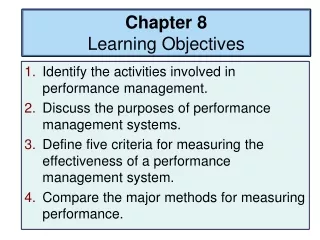
Chapter 8 Learning Objectives
DESCRIPTION
Chapter 8 Learning Objectives. A Typical Supply Network. Business-to-Business Electronic Commerce: Exchanging Data in Supply Networks. Portals Supplier Portals Customer Portals. Managing Complex Supply Networks. Benefits of Effectively Managing Supply Chains. Just-in-Time Production
Download

1 / 0
Télécharger la présentation 
Chapter 8 Learning Objectives
An Image/Link below is provided (as is) to download presentation
Download Policy: Content on the Website is provided to you AS IS for your information and personal use and may not be sold / licensed / shared on other websites without getting consent from its author.
Content is provided to you AS IS for your information and personal use only.
Download presentation by click this link.
While downloading, if for some reason you are not able to download a presentation, the publisher may have deleted the file from their server.
During download, if you can't get a presentation, the file might be deleted by the publisher.
E N D
Presentation Transcript
- Chapter 8 Learning Objectives
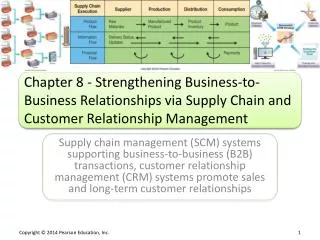
- A Typical Supply Network
- Business-to-Business Electronic Commerce: Exchanging Data in Supply Networks Portals Supplier Portals Customer Portals
- Managing Complex Supply Networks
- Benefits of Effectively Managing Supply Chains Just-in-Time Production Vendor-Managed Inventory
- Supply Chain Pitfalls & Considerations The Bullwhip Effect Corporate Social Responsibility
- Supply Chain Planning (SCP) SCP involves multiple SCM tools and modules working together to meet business needs and customer demand
- Supply Chain Execution (SCE) SCE focuses on the efficient and effective flow of materials, information, and financial transactions
- Supply Chain Visibility and Analytics Supply chain visibility Product Tracking Anticipating adverse impacts Weather impacts Labor negotiations Supply chain analytics Monitoring SC Performance Identifying problem spots
- Supply Chain Visibility and Analytics
- SCM Modules -- Examples
- Developing an SCM Strategy
- Key Technologies for Enhancing SCM Extensible Markup Language XML, much like HTML for Web sites, creates a standard many businesses can use to help facilitate exchanging data
- Key Technologies for Enhancing SCM:Radio Frequency Identification
- Customer Relationships
- Developing a CRM Strategy
- Architecture of a CRM System
- Analytical CRM:Digital Dashboards
- Analytical CRM:Identity Management
- Ethical Concerns with CRM CRM systems may facilitate coercive sales practices Systems may categorize customers in a way customers take offense to Personalized communication may become too personal





More Related