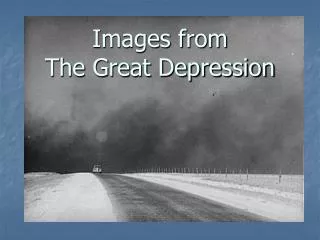
Images from The Great Depression
240 likes | 618 Vues
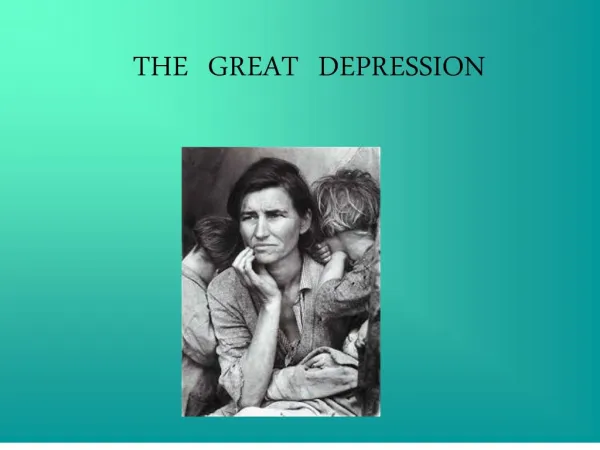
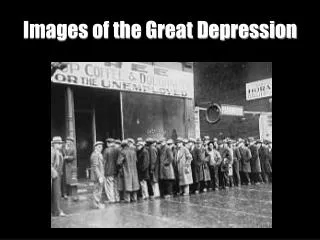
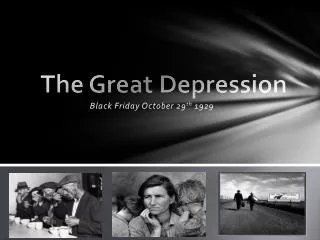
The Great Depression, culminating on Black Tuesday, October 29, 1929, left millions jobless and homeless. Families abandoned their possessions and sought refuge, epitomized by the Dust Bowl's devastating drought and flood refugee camps like Forrest City, Arkansas. Iconic images capture the harsh reality of destitution, as seen in the lives of migrant workers in California and tenant farmers in Oklahoma. The era was marked by widespread poverty, shanty towns, soup kitchens, and the fight against segregation and white supremacy, reminding us of human resilience in dire times.


Images from The Great Depression
E N D
Presentation Transcript
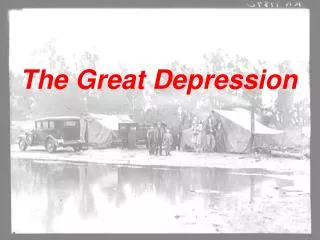
People packed up everything they owned and moved when they lost their homes.
Flood refugee encampment at Forrest City, ArkansasEvans, Walker
"We're living in a tent because we wouldn't pay anyone thirty or thirty-five dollars for a two-room bug trap." Mission Valley, San Diego, California.Lee, Russell
Family of tenant farmer at noonday meal near Muskogee, Oklahoma. His wife is shooing away flies with branch. Lee, Russell