
Alcohol
E N D
Presentation Transcript
Alcohol and Driving Alcohol is a drug that affects overall driving ability The reasons for this are: 1- The driver becomes overconfident in his/her ability 2- The drivers judgments and ability to think clearly are distorted. 3- Drivers have a tendency to make more mistakes.
Accident Probability when alcohol is involved • BAC blood Alcohol Concentration • BAC .02% accident chances are increased • A driver under the age of 21 is under the influence of alcohol at this % • BAC .05% Chances are doubled • BAC .10% Chances are 6x’s Greater • BAC .15% Chances are 25x’s Greater
Alcohol Statistic • 50% of all accidents with fatalities involve alcohol. • The number fatalities related to alcohol increases: • At night, On weekends, around Holidays • 1 out of 50 people are under the influence of alcohol or drugs at any time of day. • 1 out of 10 are D.U.I on weekend nights
BAC Factors • A person’s BAC is based on these 3 main factors: • The Person’s weight • How much you drink • How fast you drink • The alcohol you consume is absorbed into the bloodstream in about 10 to 20 minutes Small intestine • Eating before drinking will slow the absorption rate • This doesn’t change your BAC
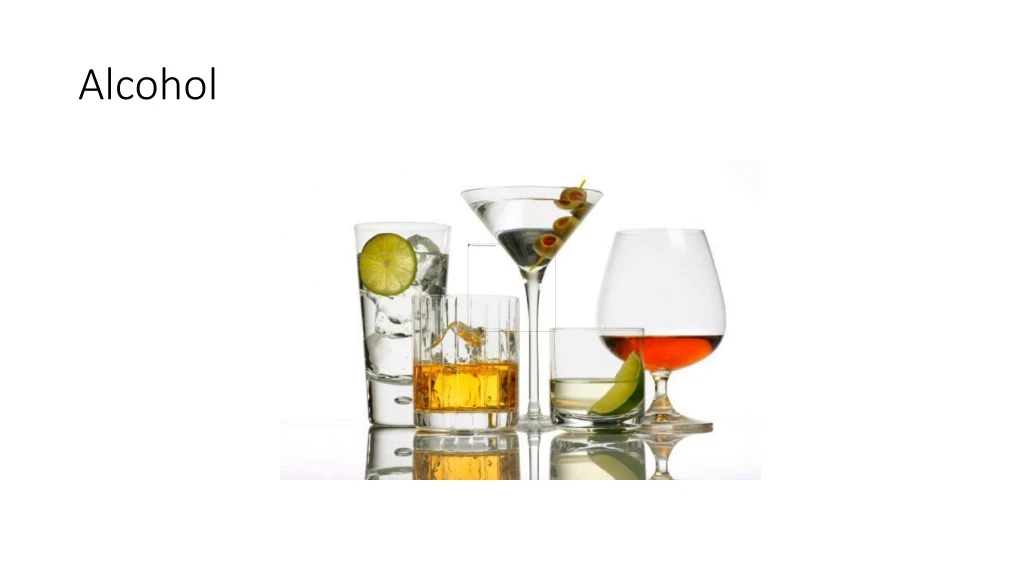
How Much is One Drink • One 12 ounce can of beer = one 5 ounce glass of wine = one 1 and ½ ounce drink of whiskey • Beer 4% alcohol • Wine 12% alcohol Whiskey 45% alcohol
B4UDRINK Alcohol Educator • http://www.b4udrink.org/ • Use this website to see how alcohol affects your BAC and what it can do to your physical health.
Alcohol Facts • Acts as a depressant on the CNS: slows your reactions, impairs judgments • Has calories but no nutritional value • Decreases mental and physical ability • A given amount has different effects on individuals • TIME is the only way to sober up
The Alcohol Path • Enters the bloodstream mainly through the small intestines • 10 to 20 minutes to be absorbed (food will slow down the rate of absorption but not stop it) • Carbonated drinks will be absorbed faster • Alcohol travels to the brain where it impairs your driving ability by altering your mental capacity and physical ability
Alcohol Elimination • Alcohol is oxidized by the liver at a rate of approximately ½ ounce per hour (1 drink) • This lowers your BAC by .015 each hour • After a person stops drink their BAC will continue to rise until all of the alcohol is absorbed • Some sobering up myths are: you can sweat it out, cold shower, drinking black coffee
Effects of Alcohol • 2 to 4 drinks of alcohol impairs • Reaction time • Coordination • Balance • Your Driving skills that are affected are: • Alertness • Judgments • Reactions
Signs of Impairment • Become more talkative • Increased self confidence • Making poor judgments • Drugs may also affect driving skills • Cold pills • Tranquilizers • Prescription medications
Signs of Impairment while Driving • Speeding or slow driving • Weaving • Inconsistent speed • Quick stops • No headlights • Wide turns
The Only Way To Reduce the risk of a Crash caused by Drinking and Driving • Don’t Drink and Drive!!!!
State Test library (Alcohol) • Driving under the influence of intoxicating beverages means: • The driver’s senses and judgments are impaired by alcohol • The best way to reduce your chances of having an alcohol related accident is: • Don’t drive after drinking
State test library continued • The only way to sober up is: Time • Crash Probability • BAC .05% = Risk Doubles • BAC .10% = Risk is 6x’s greater • BAC .15% = Risk is 25x’s greater • 1 twelve ounce can of beer = 1 five ounce glass of wine = one 1 and ½ ounce drink of whisky
State test library continued • Other drugs that affect driving are: cold pills, tranquilizers, prescription medications • BAC factors are: your weight, amount you drink, how fast you drink • After 2 to 4 drinks alcohol begins to impair: reaction time, coordination and balance and judgments • The implied consent law states that if you are suspected of drinking and driving you must submit to a breath test.