Download
1 / 7
70 likes | 186 Vues
This chapter delves into the applications of nuclear energy, focusing on fission and fusion reactors. It discusses the operational principles of nuclear power plants, including the significance of cooling towers in managing heat and thermal pollution. The text highlights the limitations of current fusion technologies, emphasizing ongoing research like the National Spherical Torus Experiment at Princeton University. Comparisons are drawn between fission and fusion, noting fission's risks like meltdown and toxic waste and the promise of hydrogen-based fusion with no immediate dangers or waste.

E N D
CHAPTER24 Nuclear Energy III. Applications (p.704-708)
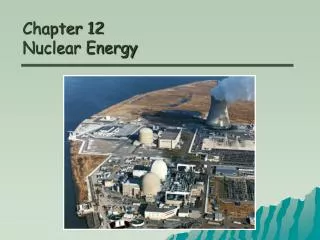
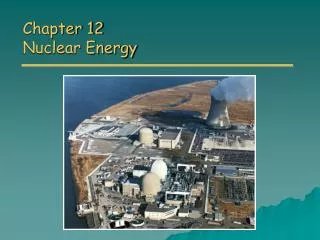
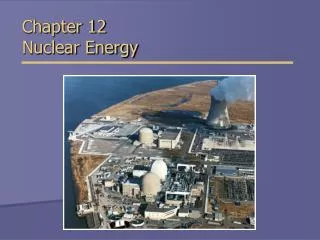
Cooling Tower A. Nuclear Power • Fission Reactors
A. Nuclear Power • Fission Reactors
A. Nuclear Power • Fusion Reactors (not yet sustainable)
A. Nuclear Power • Fusion Reactors (not yet sustainable) National Spherical Torus Experiment Tokamak Fusion Test Reactor Princeton University
235U is limited danger of meltdown toxic waste thermal pollution Hydrogen is abundant no danger of meltdown no toxic waste not yet sustainable A. Nuclear Power FISSION FUSION vs.
B. Others • Choose one of the following to investigate: • Irradiated Food (p.676) • Radioactive Dating (p.683) • Nuclear Medicine (p.692-693) • Make a mini-poster to display what you have learned.