
SlideServe
Menu
Préférences
© SlideServe · v2026

Understanding Homeostasis: The Body's Internal Control System

ava-petersen avatar
13 diapositives · 248 Views · Nov 18, 2014

Homeostasis is the body's ability to maintain a stable internal environment, akin to a thermostat keeping a home at a desired temperature. It involves a control system consisting of sensors, a communication network (nerves), a control center (the brain), and targets (body parts responding to signals). Negative feedback loops help reverse changes away from a set point, while positive feedback loops amplify changes when rapid responses are necessary. Disruption of homeostasis can lead to serious conditions like diabetes, which affects blood sugar regulation.
Understanding Homeostasis: The Body's Internal Control System - slide 1
01 / 13Understanding Homeostasis: The Body's Internal Control System
1 / 17

Télécharger la présentation

Understanding Homeostasis: The Body's Internal Control System
Une image / un lien ci-dessous est fourni (tel quel) pour télécharger la présentation

Politique de téléchargement : le contenu du site vous est fourni TEL QUEL pour votre information et votre usage personnel ; il ne peut être vendu, concédé sous licence ni partagé sur d’autres sites sans l’accord de son auteur.Le contenu vous est fourni TEL QUEL, pour votre information et votre usage personnel uniquement. Téléchargez la présentation en cliquant sur ce lien. Lors du téléchargement, si vous ne parvenez pas à télécharger une présentation, l’éditeur a peut-être supprimé le fichier de son serveur.Pendant le téléchargement, si vous ne parvenez pas à obtenir une présentation, le fichier a peut-être été supprimé par l’éditeur.

F I N

Plus de contenu associé

Transcription de la présentation
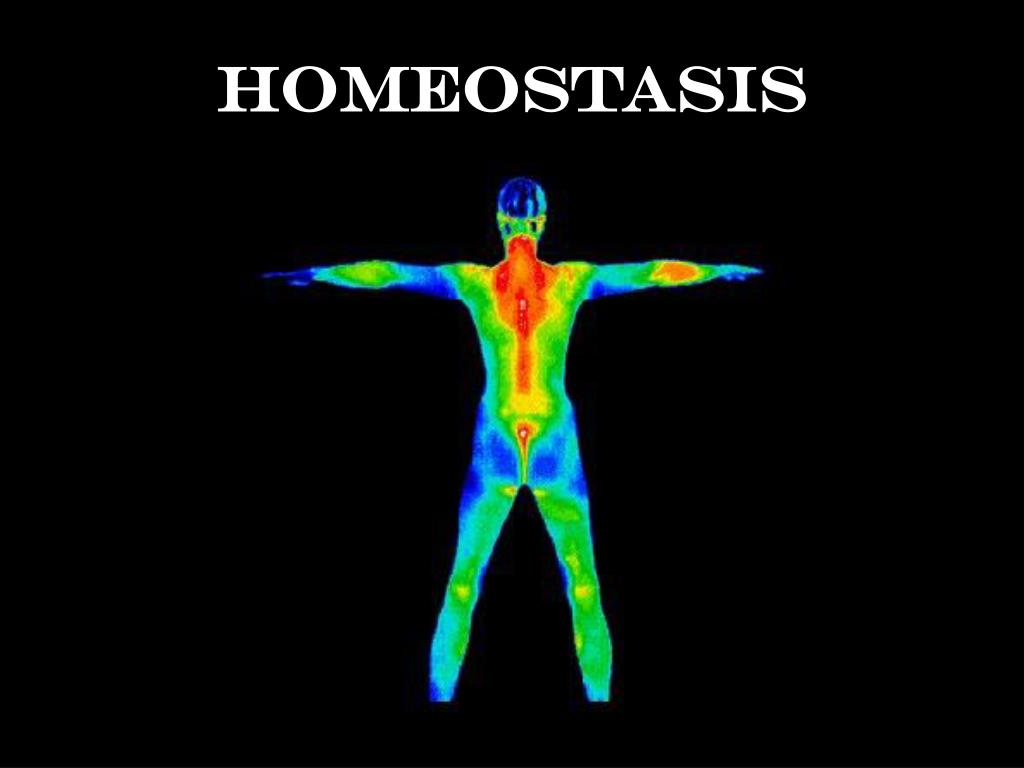
  1. Homeostasis

  2. Homeostasis is like your home’s thermostat Thermostat’s set point is 75ºF heat Inside temperature = 72ºF 73ºF 74ºF 75ºF

  3. Definition: The body maintains a constant internal environment • Importance: Body processes work best in specific conditions

  4. !*%!?%&# Control System • Sensors • Gather information about the internal and external environment • Ex: pressure sensors in your foot • Communication system • impulse (message) sent through the body • Ex: nerves connected from foot to brain. • Control Center • Interprets sensory information • Ex: Brain interprets pain in foot. • Targets • Body part that receives the final message • Ex: Muscles in foot, muscles in jaw

  5. Negative Feedback Loops • Reverses any change that moves conditions from a set point • Ex: if your temp drops…you will shiver to reverse that 98.6 98.4 98.1 97.7 97.5 97.2 96.8 97.2 97.5 97.7 98.1 98.4 98.6

  6. Negative Feedback Loops • Reverses any change that moves conditions from a set point • Ex: if your temp drops…you will shiver to reverse that • Ex: If your temp rises…you will sweat to reverse that 98.6 98.8 99.2 99.5 99.7 100.1 99.7 99.5 99.2 98.8 98.6

  7. Negative Feedback Loop: Cold Response

  8. Positive Feedback Loop • Increases the changes away from set points • Important when rapid change is needed • Ex: Pregnancy contractions • Uterus contractions begin slowly • Oxytocin released to speed up the contractions

  9. platelets blood vessel fibrin clot white blood cell red blood cell Positive Feedback Loop • More examples… • Growth hormones stimulate cell division • Torn vessel stimulates release of clotting factors

  10. Working Together • Thermoregulation: Maintenance of body temperature • Skin (sensors): sensors detect cold • Nervous system (communication system): electrical impulse sent to brain • Hypothalmus in brain (control center): releases hormones into blood stream • Muscles (target) : Hormones cause shivering

  11. Beck Weathers, thought to be dead, survived a night exposed to Mt. Everest cold. Homeostasis disruption • Some disruptions are temporary • Infections, fever, sore throats, muscle soreness • Some disruptions are too great for your body to control • Frost bite: Sensors are destroyed • Paralysis: Messages from brain can’t reach target • Can lead to death

  12. Diabetes: inability to control blood sugar • Normally • Glucose in blood rises after meals • Pancreas releases insulin • Cells remove the glucose • Type 1 • Immune system destroys pancreas cells • Pancreas unable to make insulin • Blood pH decreases as glucose builds up • Type 2 • Pancreas does not make enough insulin • Blood pH decreases as glucose builds up glucose glucose glucose glucose glucose glucose glucose glucose glucose glucose glucose glucose glucose glucose glucose glucose glucose glucose insulin insulin insulin insulin insulin insulin insulin glucose glucose glucose glucose

  13. Review • Define homeostasis. • Name and describe the four parts of the “control system.” • What is negative feedback? • What is positive feedback? • Is the following example positive or negative feedback? During heavy exercise your body loses water when you sweat. As a result of water loss, your body redirects the remaining water inside your body to vital parts of your body to replenish these vital organs. • What is diabetes? • How does Type I and Type II diabetes differ?