Download
1 / 8
90 likes | 265 Vues
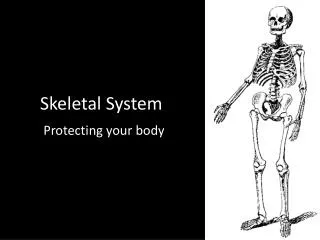
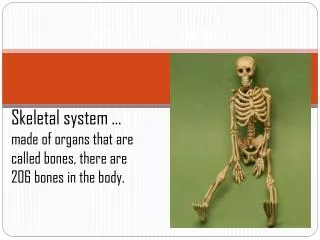
The skeletal system comprises bones, tendons, ligaments, and cartilage, providing essential support and protection for the body. It stores minerals, manufactures blood cells, and acts as scaffolding for muscles. Key components include compact and spongy bone, bone marrow, and flexible cartilage. Bones facilitate movement and are lightweight yet strong. Maintaining bone health requires a balanced diet rich in calcium and phosphorus, regular exercise, and safety precautions to prevent injuries. Common diseases include osteoporosis and scoliosis, highlighting the importance of care for our skeletal system.

E N D
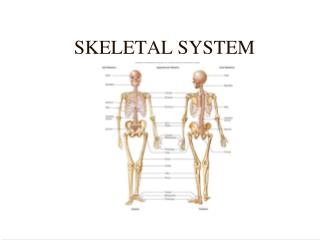
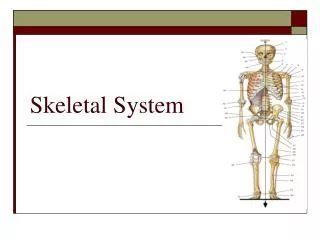
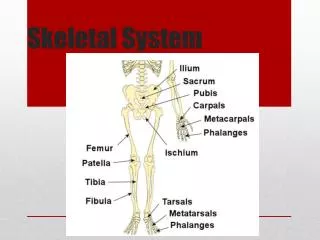
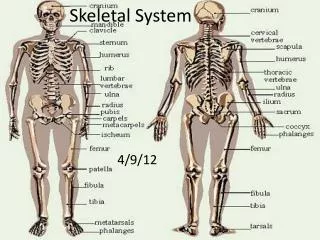
Skeletal system includes… Bones Tendons Ligaments Cartilage
Function … Support your body & protect internal organs Store minerals Manufacture blood cells Scaffolding for muscles
Structure info Bone- blood vessels come in and out of the bone. • Compact bone-outside layer • Spongy bone-ends of bones; has small spaces like a sponge but still strong • Bone marrow-produces the body’s blood cells • Cartilage-connective tissue that is flexible; works as a cushion.
How are Structure and Function related? When two bones meet they allow you to move. Bones are lightweight but strong.
Taking care… Balanced diet • calcium and phosphorus Exercise Wearing safety equipment to prevent injuries • helmet , knee and shoulder pads
Diseases of the bone: Osteoporosis • disease when the body’s bones become weak and break easily. Scoliosis • genetic disease that creates a curvature of the spine Normal Spine Spines with different patterns of scoliosis
FUN facts: As an infant most of your skeleton is cartilage. 20% of an adult’s body weight is bone.