Download
1 / 15
150 likes | 267 Vues
This comprehensive overview explores the impact of World War II on U.S. foreign policy, tracing its roots from Wilson's 14 Points and the Treaty of Versailles to the rise of totalitarianism and the Cold War. Key themes include the U.S. isolationism, the Red Scare, and the formation of the League of Nations. The narrative progresses through significant events such as the Lend-Lease Act, Stalingrad, and Yalta, leading to post-war planning and the establishment of NATO. Major figures like Truman, Churchill, and Eisenhower illustrate the complex strategies of deterrence and containment during a pivotal era.

E N D
Wilson’s Legacy:14 Points & Versailles Clemenceau & Lloyd George
Into Isolationism Palmer • Russian Civil War • Red Scare • League of Nations
Totalitarianism Orwell • Fascism • Stalinism • Appeasement • Neutrality
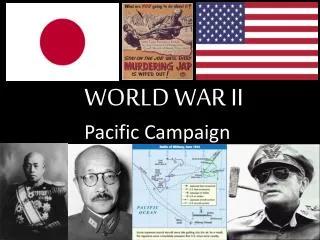
World War II • Aggression 1939-41 • Non-Aggression Pact • Lend-Lease • Allies Advance 1942-45 • Stalingrad • Normandy
Post War Planning • Yalta • United Nations
Truman & the Hard Line • Atomic Bomb • Churchill Speech • Henry Wallace
Cold War Assumptions Containment Present at the Creation -Acheson George F. Kennan (1904 - 2005)
Berlin • Blockade • Airlift (1948-49) • Wall (1961)
Munich Analogy • Appeasement • NATO (1949) • Warsaw Pact (1955)
Monolithic Block • Kremlin • Export Revolution • Yugoslavia: Tito
Domino Theory • China (1949) • Chiang Kai-shek • Mao
Deterrence • Arms Race • M.A.D. = Mutual Assured Destruction • Missile Gap
Military-Industrial Complex Dulles • Massive Retaliation • Eisenhower & John Foster Dulles • Brinkmanship • “New Look” • Ike’s Warning Eisenhower