Download
1 / 16
160 likes | 275 Vues
This overview of the muscular system highlights various types of body movements including flexion, extension, rotation, abduction, and circumduction. Additionally, it distinguishes between special movements such as dorsiflexion and plantar flexion. The text categorizes muscles into prime movers, antagonists, synergists, and fixators, elaborating on their roles in movement. Naming conventions for skeletal muscles are discussed, focusing on factors like direction, size, location, number of origins, shape, and action, providing a comprehensive understanding of muscle functions in the human body.

E N D
Types of Ordinary Body Movements • Flexion • Extension • Rotation • Abduction • Circumduction
Body Movements Figure 6.13a–c
Body Movements Figure 6.13d
Special Movements • Dorsifelxion • Plantar flexion • Inversion • Eversion • Supination • Pronation • Opposition
Types of Muscles • Prime mover – muscle with the major responsibility for a certain movement • Antagonist – muscle that opposes or reverses a prime mover • Synergist – muscle that aids a prime mover in a movement and helps prevent rotation • Fixator – stabilizes the origin of a prime mover
Naming of Skeletal Muscles • Direction of muscle fibers • Example: rectus (straight) • Relative size of the muscle • Example: maximus (largest)
Naming of Skeletal Muscles • Location of the muscle • Example: many muscles are named for bones (e.g., temporalis) • Number of origins • Example: triceps (three heads)
Naming of Skeletal Muscles • Location of the muscle’s origin and insertion • Example: sterno (on the sternum) • Shape of the muscle • Example: deltoid (triangular) • Action of the muscle • Example: flexor and extensor (flexes or extends a bone)
Head and Neck Muscles Figure 6.15
Trunk Muscles Figure 6.16
Deep Trunk and Arm Muscles Figure 6.17
Muscles of the Pelvis, Hip, and Thigh Figure 6.19c
Muscles of the Lower Leg Figure 6.20
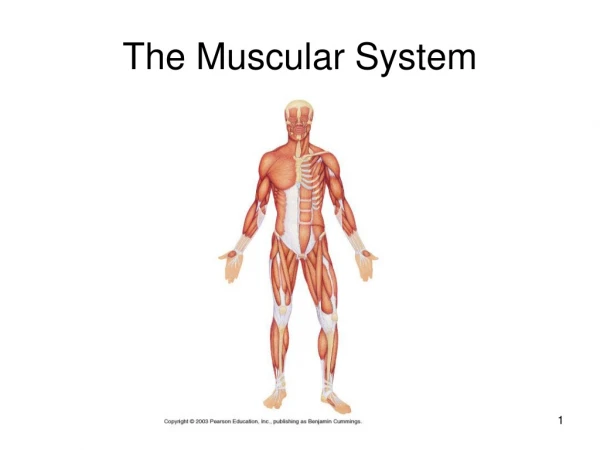
Superficial Muscles: Anterior Figure 6.21
Superficial Muscles: Posterior Figure 6.22