Download
1 / 11
110 likes | 234 Vues
World War I (1914-1918), known as The Great War, stemmed from competition among industrial nations and diplomatic failures. It dramatically altered life in Europe and America, devastated economies, and laid the groundwork for World War II. Key questions include the factors leading to the war, significant events, major leaders, and the outcomes, particularly the Treaty of Versailles terms. The conflict saw the Central Powers battling the Allied Powers in a grueling war characterized by trench warfare, resulting in immense suffering and loss on both sides.

E N D
War breaks out World War I The Great War The War to end all wars
Essential Understandings • World War I (1914-1918) was caused by competition among industrial nations in Europe and a failure of diplomacy. The war transformed European and American life, wrecked the economies of Europe, and planted the seeds for a second world war.
Essential Questions • What factors produced World War I? • What were the major events of the war? • Who were the major leaders? • What were the outcomes and global effects of World War I? • What were the terms of the Treaty of Versailles?
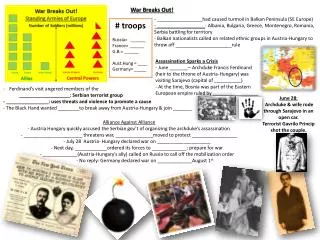
Countries choose sides • Russia sides with Serbia, moves troops to borders of Aus-Hun and Germany • Germany declares war on Russia and throws in France for good measure • Britain declares war on Germany • Holy cow! Can you say that again? • Central Powers – Germany, Austria-Hungary, Bulgaria, Ottoman Empire • Allied Powers – Britain, France, Russia, Italy, Japan • Summer of 1914 – millions marched off to battle thinking it would be a short war
Stalemate • Schlieffen Plan – defeat France quickly, turn attention to Russia • Yeah, not so much • France holds Germany off in the West while Russia invades from the East • War for Germany now in deadlocked conflict on Western and Eastern Fronts
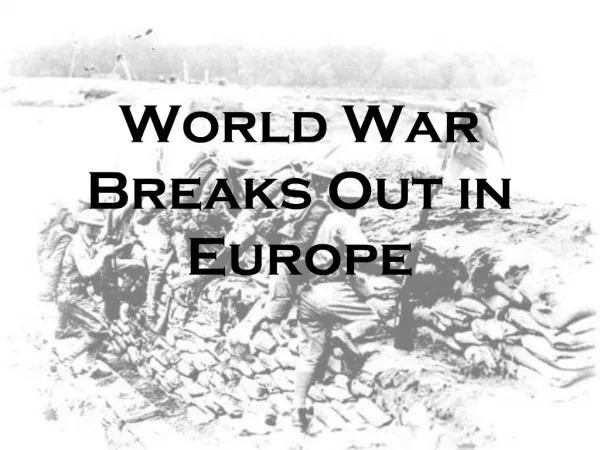
Trench Warfare • War settles into trench warfare • Miles and miles of parallel trenches for protection from enemy fire • Pure misery – “The men slept in mud, washed in mud, ate mud, and dreamed mud.” • Rats, no fresh food, impossible to sleep, disease • “No man’s land” – bombed out area between trenches • Men sent “over the top” to take opposing trenches, met with devastating machine gun fire • Staying in own trench not necessarily safe either – enemy artillery fire, shot by own men if you didn’t go or came back too early