Cellular Energy Unit
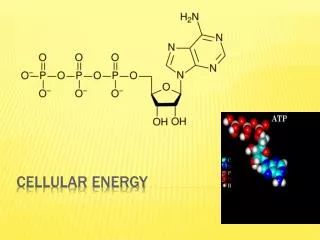
ATP (adenosine triphosphate) is the primary chemical energy source for most cellular processes. Energy is released from ATP when a phosphate group is removed, resulting in ADP (adenosine diphosphate), which can be reconverted into ATP. ATP is formed through the breakdown of organic compounds in food, with carbohydrates, especially glucose, being the most commonly utilized. Lipids yield more ATP compared to other sources, while proteins are rarely broken down for energy. Understanding ATP's role is crucial for grasping how cells function efficiently.

Cellular Energy Unit
E N D
Presentation Transcript
ATP - the chemical energy used for most cell processes - energy is released when a phosphate group is removed - ADP is then produced (can be converted back to ATP)
Formation of ATP - ATP comes from the breakdown of food (organic compounds) - your food does not directly contain ATP for your cells
Formation of ATP (cont) - Carbohydrates are the most commonly broken down - glucose is the most common - Lipids produce more ATP than any other - Proteins are rarely broken down