Download
1 / 5
50 likes | 156 Vues
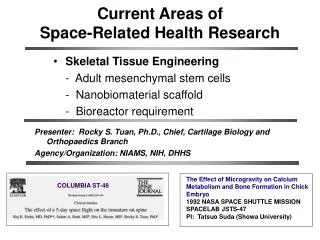
This presentation explores the effects of microgravity on calcium metabolism and bone formation, highlighting findings from a 1992 NASA Space Shuttle mission involving chick embryos. It discusses advanced tissue engineering approaches utilizing adult mesenchymal stem cells and nanobiomaterial scaffolds, emphasizing how dynamic culture and bioreactors can enhance cartilage formation. Key areas of research include understanding stem cell mechanisms under randomized gravity conditions and designing innovative bioreactors for better tissue engineering outcomes. Collaborative efforts leverage unique human and physical resources to advance space-related health research.

E N D
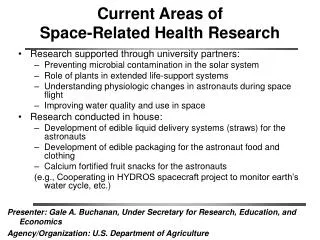
The Effect of Microgravity on Calcium Metabolism and Bone Formation in Chick Embryo 1992 NASA SPACE SHUTTLE MISSION SPACELAB JSTS-47 PI: Tatsuo Suda (Showa University) COLUMBIA ST-48 Current Areas of Space-Related Health Research • Skeletal Tissue Engineering - Adult mesenchymal stem cells - Nanobiomaterial scaffold - Bioreactor requirement Presenter: Rocky S. Tuan, Ph.D., Chief, Cartilage Biology and Orthopaedics Branch Agency/Organization: NIAMS, NIH, DHHS
Polymer Solution (a-Hydroxy Polyester) Voltage Source Electrospun nanofibers V 18 kV With seeded cells Polymer Cloud Seeded cells stained for cytoskeleton Ground Application of Electrospun Nanofibrous Scaffold for Cell-Based Tissue Engineering
Dynamic Culture Promotes Tissue Integration Tissue-Engineered Cartilage Using Nanofibrous Scaffold, Human Adult Stem Cells, TGF-b, and Bioreactor
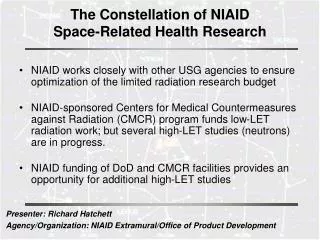
Promising Areas for Space-Related Health Research Collaborations • Understand the mechanisms responsible for randomized gravity mediated enhancement of stem cell-based cartilage formation • Design novel bioreactors based on microgravity related principles for improved tissue engineering applications.
Existing Resources to Facilitate Space-Related Health Research Cartilage Biology and Orthopaedics Branch NIAMS, NIH • Human resources - a unique consortium of biologists, engineers and surgeons • Physical resources - instrumentation design and prototyping, mechanoactive bioreactors, biomaterial scaffold production, adult stem cell technologies, mechanical testing