Download
1 / 16
160 likes | 272 Vues
Explore Egypt's Old Kingdom (2600-2300 B.C.), a time of powerful pharaohs viewed as gods on Earth. Their words were law, and Egyptian religion was central, with deities like Re and Osiris influencing daily life. The belief in an afterlife led to significant practices like mummification and the creation of the Book of the Dead. The era is renowned for monumental pyramids, including King Khufu’s Great Pyramid in Giza—once the tallest structure in the world. Discover the intricate beliefs, rituals, and achievements that defined this fascinating period of history.

E N D
Egypt’s Old Kingdom By Pharaoh McCrotty
Old Kingdom Rulers • Old Kingdom—began in 2600 B.C. & ended in 2300 B.C. • Pharaoh—Egyptian Kings. Also means “great house” • All powerful and ruled every activity • His word was law and had to be obeyed • Egyptians thought he was god on Earth
Egypt’s Religion • Deities—gods and goddesses • Egyptians believed they controlled forces of nature and human activities • Rituals were important
Egyptian Gods and Goddesses • Re—sun god • Hapi—god of the Nile • Isis—goddess of loyalty/wife and mother • Osiris—King of the Dead
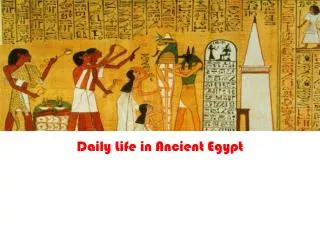
Life After Death • Believed in better life after death • Book of the Dead—collection of spells and prayers that Egyptians studied to obtain life after death • Embalming—protecting and preserving a body
Life After Death • Mummy—wrapped body • Doctors used herbs and drugs to treat illnesses • Stitches and setting bones • First to specialize in medicine
Pyramids • Pyramids—giant tombs that protected the bodies of dead pharaohs. • Supplied needs of the pharaohs for the afterlife • Clothing • Jewlry • Food • furniture
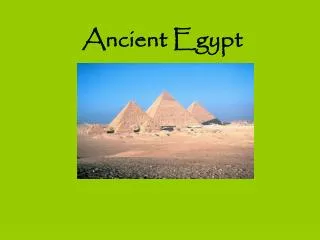
Great Pyramid • King Khufu’s Great Pyramid— • located in Giza • 500 ft tall and size of 9 football fields. • Tallest structure in the world for 4,000 yrs. • 48 stories • Built without special tools such as the wheel