
ISP 26.1
E N D
Presentation Transcript
How Bacteria Are Classified • Eubacteria or Archaea (Which Domain?) • Mode of Nutrition • Ability to produce Endospores • Means of Mobility (Flagella?) • Shape (cocci, bacilli, or spirilla) • Gram Stain • Positive – thick peptidoglycan cell wall • Negative – thin peptidoglycan cell wall
Prokaryotic Nutrition • Bacteria differ in their need for, and tolerance of, oxygen (O2). • Obligate anaerobesare unable to grow in the presence of O2; ex. botulism, gas gangrene, and tetanus • Facultative anaerobesare able to grow in either the presence or absence of gaseous O2. • Aerobic organisms (Obligate aerobes) - including animals and most prokaryotes) require a constant supply of O2 to carry out cellular respiration.
How Bacteria Obtain Energy • Every type of nutrition, except for ingestion of whole food, is found in bacteria. • Autotrophs – manufacture their own organic compounds • Photoautotrophs • Chemoautotrophs • Heterotrophs – must obtain their energy by consuming organic substances produced by autotrophs. • Parasites • Saprophytes (Saprobes) • Decomposers
Pasteur’s experiments disproved the long held belief in spontaneous generation
Sources of Genetic Variation • In bacteria, genetic recombination can occur in three ways. • Conjugation - occurs when a bacterium passes DNA to a second bacterium through a tube (sex pilus) that temporarily joins two cells; occurs only between bacteria in same or closely related species. • Transformation - involves bacteria taking up free pieces of DNA secreted by live bacteria or released by dead bacteria. • Transduction -bacteriophage transfer portions of bacterial DNA from one cell to another.
Bacterial Conjugation Bacterial Conjugation Link
Transformation in Bacteria Transformation in Bacteria Link
General Transduction General Transduction Link
Endospore Formation • Some bacteria form resistant endospores in response to unfavorable environmental conditions. • Endospores survive in the harshest of environments: desert heat and dehydration, boiling temperatures, polar ice, and extreme ultraviolet radiation.
Heterotrophic Prokaryotes • Some heterotrophs are symbiotic, forming intimate, long-term relationships with members of other species; includes: • Mutualistic • Commensalistic • parasitic relationships
The bacteria of genus Rhizobium invade the roots of legumes – resulting in the formation of nodule – The bacteria convert atmospheric nitrogen to an organic nitrogen that the plant can use
Heterotrophic Prokaryotes • Commensalistic bacteria live in or on organisms of other species and cause them no harm. • Parasitic bacteria are responsible for a wide variety of infectious plant, animal and human diseases.
The Bacteria Gram Stain & Shape • The Gram stain procedure (developed by Hans Christian Gram) differentiates bacteria. • Gram-positive bacteria stain purple, whereas Gram-negative bacteria stain pink. • This difference is dependent on the thick or thin (respectively) peptidoglycan cell wall.
The Bacteria • Bacteria and archaea have three basic shapes. • spirillum- spiral-shaped. • bacillus - elongated or rod-shaped bacteria • Coccus - bacteria are spherical • Cocci and bacilli tend to form clusters and chains of a length typical of the particular species.
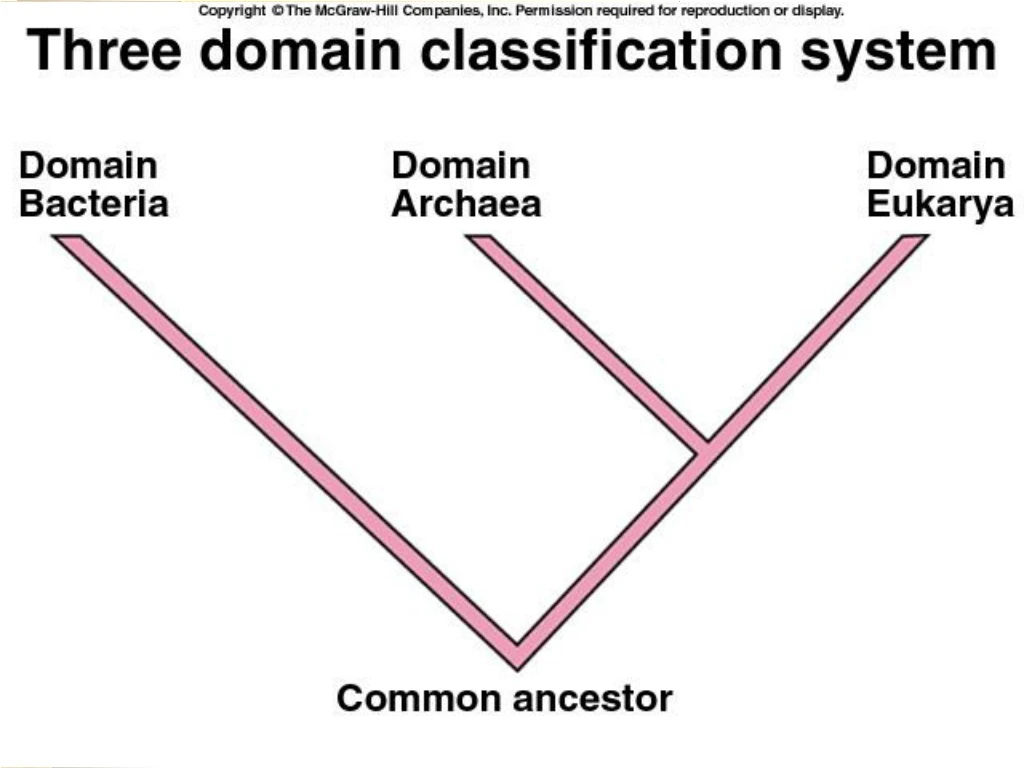
The Archaea • Carl Woese - base sequence of their rRNA differs from Bacteria • Other differences: • Archaea do not have peptidoglycan in their cell walls like the Bacteria • Archaea biochemical more like Eukarya than Bacteria • Archaea now thought to be more closely related to Eukarya than to Bacteria
The Archaea • Types of Archaea • Methanogens live under anaerobic environments (e.g., marshes) where they produce methane. • Halophiles require high salt concentrations (e.g., Great Salt Lake). • Thermoacidophiles live under hot, acidic environments (e.g., geysers).
Kingdom Protista • Catch all Kingdom - artificial & used more for convience. • Eukaryotic cells (Endosymbiotic Theory) • Most are unicellular (some filamentous, colonial or multicellular) • Animal-like, plant-like or fungus-like • Asexual reproduction the norm, but some reproduce sexually.
Kingdom Protista • Complexity • Eukaryotic • Autotrophic or Heterotrophic • Highly varied life cycles (asexual & sexual reproduction) • Highly specified organelles • Symbiotic relationships (parasitismmutualism)
The Green Algae • Green algae are believed to be closely related to the first plants because both of these groups • have a cell wall that contains cellulose, • possess chlorophylls a& b • store reserve food as starch inside of the chloroplast.
Water Molds Figure 22.19
Kingdom Fungi • Multicellular Eukaryotes • Heterotrophic by absorption • Saprotrophic decomposers -breaking down wastes or remains of plants & animals • Parasitic, mutualistic • Others form an association with a green alga or cyanobacterium to form a lichen • Energy reserve Glycogen (unlike plants)
Terms to know: Hyphae (singular hypha) Mycelium (singular mycelia) Chitin