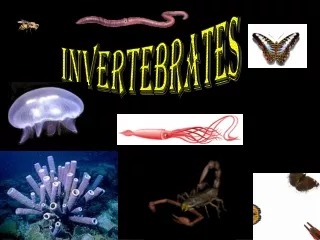
Evolution of Invertebrates: From Choanoflagellates to the Cambrian Explosion
The journey of invertebrates began with choanoflagellates, single-celled organisms that formed colonies and possibly evolved into the first animals, sponges. For over 3 billion years, life remained unicellular until the emergence of trace fossils revealing the “tracks and burrows” of early animals around 600 million years ago. The Ediacara fauna (565-544 MYA) showed a variety of body plans but lacked specialized tissues. The Cambrian Explosion (530-515 MYA) marked a significant evolutionary leap, introducing complex body plans and diversified animal forms, establishing invertebrates as the most abundant life forms on Earth.
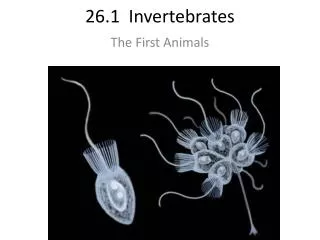

Evolution of Invertebrates: From Choanoflagellates to the Cambrian Explosion
E N D
Presentation Transcript
26.1 Invertebrates The First Animals
Choano-flagellates formed colonies, may have evolved into sponges (1st animals)
Trace fossils - reveal “tracks and burrows” of first animals (600 million years ago)
1st animals came before Cambrian explosion. Ediacara Animals - 565-544 MYA - no specialized tissue - different body plans - no organization - wormlike, lived at bottom of shallow water
Cambrian Explosion - 530-515 MYA - rapid appearance of most animal phyla
Cambrian Explosion - Animals developed: - complex body plans - specialized tissue - symmetry, segmentation - appendages - limbs or antennae
Use pages 754 to 756 in text to answer the rest of 26.1 workbook