
SlideServe
Menu
Préférences
© SlideServe · v2026

Forensic Anthropology

bess avatar
28 diapositives · 643 Views · Jul 23, 2014

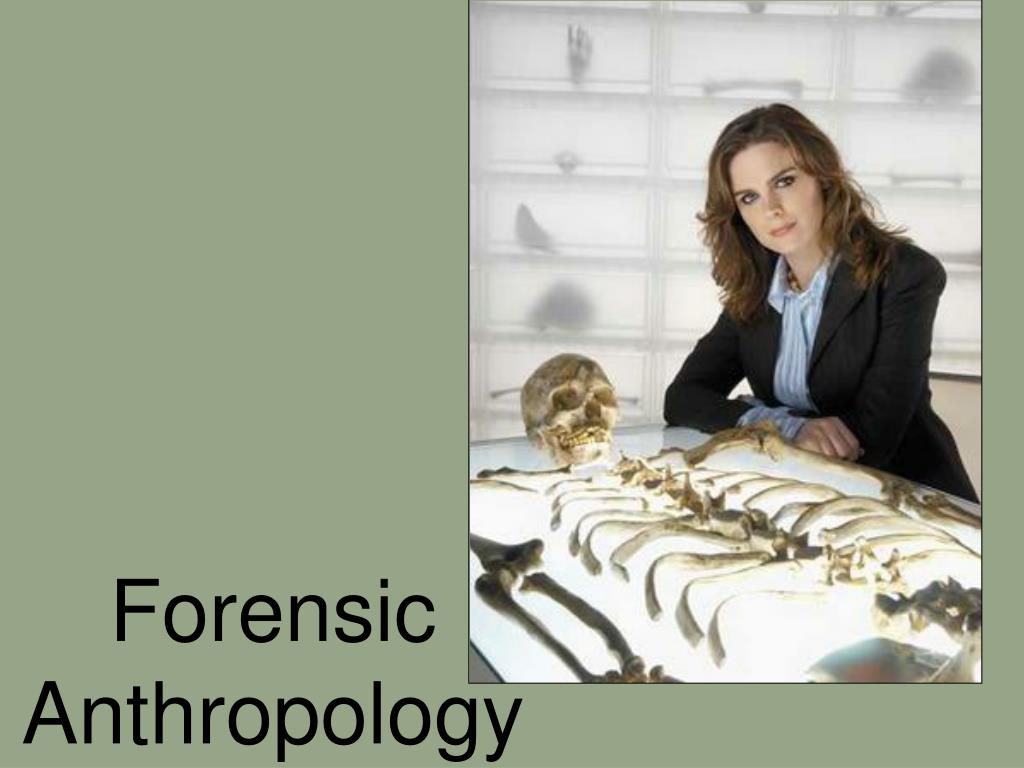
Forensic Anthropology. Forensic Anthropology. Definition: An applied area of physical anthropology Role: To assist law enforcement agencies in a medico legal context. General Goals. 1. Establish biological profile: age, sex, race, height 2. Determine time since death
Forensic Anthropology - slide 1
01 / 28Forensic Anthropology
1 / 17

Télécharger la présentation

Forensic Anthropology
Une image / un lien ci-dessous est fourni (tel quel) pour télécharger la présentation

Politique de téléchargement : le contenu du site vous est fourni TEL QUEL pour votre information et votre usage personnel ; il ne peut être vendu, concédé sous licence ni partagé sur d’autres sites sans l’accord de son auteur.Le contenu vous est fourni TEL QUEL, pour votre information et votre usage personnel uniquement. Téléchargez la présentation en cliquant sur ce lien. Lors du téléchargement, si vous ne parvenez pas à télécharger une présentation, l’éditeur a peut-être supprimé le fichier de son serveur.Pendant le téléchargement, si vous ne parvenez pas à obtenir une présentation, le fichier a peut-être été supprimé par l’éditeur.

F I N

Plus de contenu associé

Transcription de la présentation
  1. Forensic Anthropology

  2. Forensic Anthropology • Definition: An applied area of physical anthropology • Role: To assist law enforcement agencies in a medico legal context

  3. General Goals • 1. Establish biological profile: age, sex, race, height • 2. Determine time since death • (PMI- post mortem interval) • 3. Examine remains for signs of trauma • 4. Establish positive identity

  4. Who do they work with? • Police Departments • Sheriff’s Offices • Office of the Attorney General • Coroner’s offices • FBI • ATF • Private individuals

  5. Estimating Age • Skull features • Dentition • Epiphysial fusion of long bones

  6. Skull Features… • The cranium (the skull minus the lower jaw bone, or mandible) • consists of 28 bones. (6 unpaired bone, and 8 paired bones, plus 3 ear bones on each side) • Some bones are paired, which means there is a left and right one, and some bones are unpaired, meaning there is just one.

  7. Neonate – Newborn = first 28 days after birth • The mandible is more commonly known as the lower jaw bone. • It is the strongest bone of the face • The mandible is two separate bones (left and right) that fuse together to form one bone.

  8. DENTITION • Teeth can be divided into maxillary (upper) and mandibular (lower) • There are four different categories of teeth: incisors, canines, premolars, and molars. • Adults will usually have a total of 32 teeth.  • The function of each tooth is different.  Incisors are designed for cutting, canines are pointed for tearing, and premolars and molars are designed for grinding and reducing food.

  9. The Hyoid • Small, horn-shaped bone that supports the tongue, and gives attachment to many muscles in speech. • This bone is of particular interest to forensic anthropologists as it is commonly broken in cases of strangulation. • Unfusedhyphoid. This fuses at about 35 years of age.

  10. Long Bones • Humerus- your upper arm bone • Ulna/Radius - your lower arm bones • Femur – your thigh bone. It is the largest of all bones • Tibia & Fibula - two bones that make up your lower leg • tibia is known as the shin bone, and it is the second largest bone in the body

  11. Humerus Radius & Ulna

  12. FEMUR Fibula & Tibia

  13. Determining Sex • Skull features • Pelvic Bone Characteristics • Analysis of Femur • Dentition A baby's skeleton has 350 bones, but many of these fuse to give an adult a total of 206 bones.  A man's skeleton has broader shoulders than a woman's, a longer ribcage, and a pelvic girdle for walking/running.  A woman's skeleton has the same bone complement as a man's but is slightly smaller and less robust, with a wider pelvic opening to assist childbirth.

  14. Skull Features

  15. Pelvic Bone Characteristics • The innominate bones are irregular in shape • AKA: Hip Bone • the large bone in the hip, consisting of the ilium, the ischium, and the pubic bone. • They are the best means of determining the SEX of a skeleton

  16. FEMALE MALE

  17. Analysis of the Femur • Typically longer in men • Women’s bones stop developing around 18 • Men’s bones develop until about 21 • Men have more bone mass

  18. Determining Race • Caucasoid characteristics: Oval eye orbits, Narrow nasal opening • Negroid characteristics: square eye orbit, greater breadth at nose, protruding teeth • Mongoloid: in between the two. Native Americans have “shoveled” teeth. RACE IS THE HARDEST TO IDENTIFY

  19. Caucasoid

  20. American Negroid

  21. Native American

  22. Determining Time Since Death • Decay of epidermis and/or skeleton • Articulation & scattering of remains • Material Remains?? • Clothing • Objects

  23. Postmortem Interval - PMI • Antemortem trauma: Before death • Perimortem trauma: at or around the time of death • Post mortem trauma: after death Femur with animal chew marks on either end

  24. Cause of Death • Can be homicide, suicide, accidental,natural, and unknown • Easier with a fleshed body and often very difficult with flesh and organs gone • Look for things like depressions andindentations caused by blunt trauma, lead fragments, etc.