Enhancing Fisheries Management: Insights from the Cefas-Imperial-AZTI-JRC Collaborative Progress
This report summarizes the progress made by Cefas, Imperial College, AZTI, and JRC on developing an advanced software system aimed at evaluating fisheries management methods. Key objectives include describing fishers' responses to varying enforcement regimes and changes in enforcement intensity while assessing the consequences of these regimes alongside other management techniques. The software delivers graphical illustrations of enforcement costs, benefits, and user-defined relationships, facilitating a better understanding of the trade-offs between social and private benefits in fisheries management.

Enhancing Fisheries Management: Insights from the Cefas-Imperial-AZTI-JRC Collaborative Progress
E N D
Presentation Transcript
WP 6 progress Cefas, Imperial (IC), AZTI, JRC (all participants) San Seb – Sep 2008
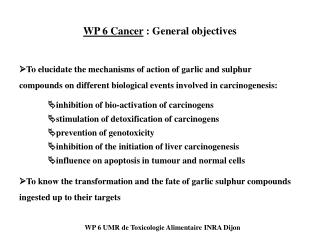
Objectives • Numerically describe fishers’ responses to (i) alternative enforcement regimes and (ii) changes in enforcement intensity • Evaluate potential consequences of alternative regimes combined with other fisheries management methods • Be used afterwards
Team • CEFAS: overall responsibility for software and “architecture” • IC: modules for calculating new functions (penalty prob.; enforcement cost) • AZTI: links FLR to databases • JRC: testing solutions for less experienced users (web access version)
Progress so far Version 1.4 (initial version as presented at the London progress meeting) 1. Input of enforcement effort – cost data and enforcement effort - probability of detecting infringement (π(e)) data, and fit appropriate models; • Users can define their own effort – cost, effort - π(e) relationships • Graphical illustration of the fitted relationships and data / user defined relationships 2. Investigate the quantitative relationships between costs and benefits (social benefits, private profits, level of harvesting) with changing system parameters and variables • Customise the COBECOS object to any given case study (e.g. fines, lambda) • Optimise for the most socially beneficial combination of enforcement efforts • Include stochasticity in the prediction of illegal harvest, social benefits and private benefits • Visualise the effect of all model parameters on the level of social or private benefits
New version Version 1.5 • Generic code – both social benefit and private benefit can be changed • New concise manual • Modified slot names • Code more efficient
Uptake: implementation Enforcement effort Cost versus prob of infringements Shadow value of biomass SOCIAL BENEFITS
Summary • Tutorial meeting in London • Prototype has been delivered • Moving into maintenance phase • Looking for feedback from users • Do all Case Studies need to use it (even if they have implemented their own version)?