Download

1 / 17
170 likes | 284 Vues
The Progressive Era, spanning from the late 19th to early 20th century, was marked by significant social reform and burgeoning industrial growth. Muckrakers like Ida Tarbell and Upton Sinclair played crucial roles in exposing the darker sides of capitalism, including corporate greed and unsafe labor conditions. This era also saw the rise of unions advocating for workers' rights, alongside movements addressing social welfare and racial inequality. As prosperity expanded, so did the cultural landscape, giving way to new forms of entertainment and leisure.

E N D
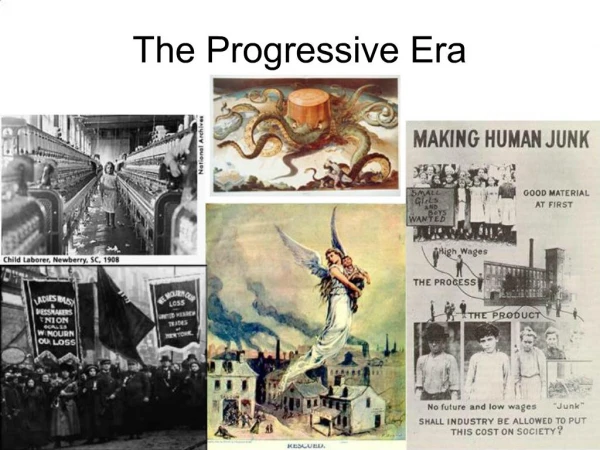
The Progressive Era Muckrakers Industrial Economy Social Problems Unions
Spirit of Progressivism (p.656-7) 1) Populist Roots: but more urban, educated 2) Problems: big business, labor, social welfare, city. Not anti-capitalism 3) Evil lured underneath American life expose the evil, and reform will follow 4) Good people & good laws will reform U.S. 5) Protestant, small town upbringing 6) “Creative Nostalgia,” conservative 7) Unique: a reform movement during prosperous times
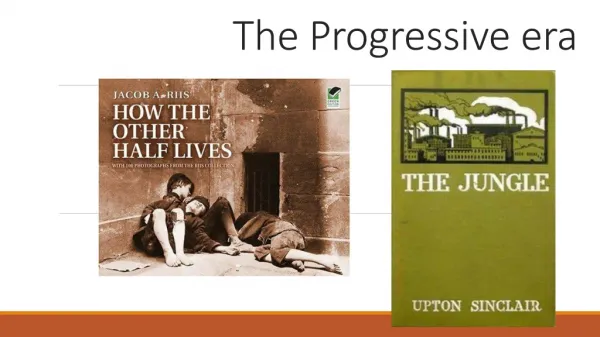
Muckrakers: 1903-1909 • From Yellow Journalism: reporter clout • Objective press: not political party papers • Expose Evil: big business, politics, drugs, food, consumers, insurance, prostitution • Samuel McClure • Ida Tarbell: expose on Standard Oil • Led to break up of Standard Oil • Upton Sinclair: The Jungle • Led to Food & Drug Administration
Industrial Economy:1900-1917 • Prosperity: more inventions, incomes • Rise, farm prices rise, middle class grows. • Henry Ford & the Model T (Photo) • Assembly line, cheap cars for the masses • Car industry huge impact, roads • Consolidation: Oligopolies • White collar class grows, changes • Middle class culture • Frederick Taylor: scientific management • Factory Work
Women & Child Labor • One Third young women worked • Clerical jobs, discouraged from professions • Florence Kelly: Child Labor • Margaret Singer: Birth Control • Triangle Shirtwaist Company Fire (photo)
African Americans • Jim Crow Laws, 8/10 blacks rural farmers • Lynching: 1900-1914 about 1000 lynched • W.E.B. Du Bois • Niagra Movement: help voting rights, • Fight Jim Crow laws, legal inequality, poverty • NAACP 1910: legal advocates for blacks • Crisis: Du Bois’ magazine for the NAACP
Unions Grow • 1900 about 1 million union members • 1920 about 5 million, or 13% of workers • American Federation of Workers (AFL) Samuel Gompers, skilled workers, 1.7m • Industrial Workers of the World (IWW) Bill “Big Bill” Haywood, more radical, • All workers, foreigners, women and blacks
Leisure & Entertainment • Young pop., more time and money • Movies: 10 million per week • Birth of a Nation: D.W. Griffith • Music: Records, Ragtime, Jazz, Dances • Baseball, College Football, Boxing • Vaudeville (photos)