Upholding ethical standards, compliance with regulations, and self-monitoring practices to prevent fraud and abuse in healthcare settings. Learn about patient privacy, civil penalties, HIPAA rules, and the consequences of violating ethical guidelines. Protecting patient information is crucial.
Une image / un lien ci-dessous est fourni (tel quel) pour télécharger la présentation
Politique de téléchargement : le contenu du site vous est fourni TEL QUEL pour votre information et votre usage personnel ; il ne peut être vendu, concédé sous licence ni partagé sur d’autres sites sans l’accord de son auteur.Le contenu vous est fourni TEL QUEL, pour votre information et votre usage personnel uniquement.Téléchargez la présentation en cliquant sur ce lien.Lors du téléchargement, si vous ne parvenez pas à télécharger une présentation, l’éditeur a peut-être supprimé le fichier de son serveur.Pendant le téléchargement, si vous ne parvenez pas à obtenir une présentation, le fichier a peut-être été supprimé par l’éditeur.
F I N
Plus de contenu associé
Transcription de la présentation
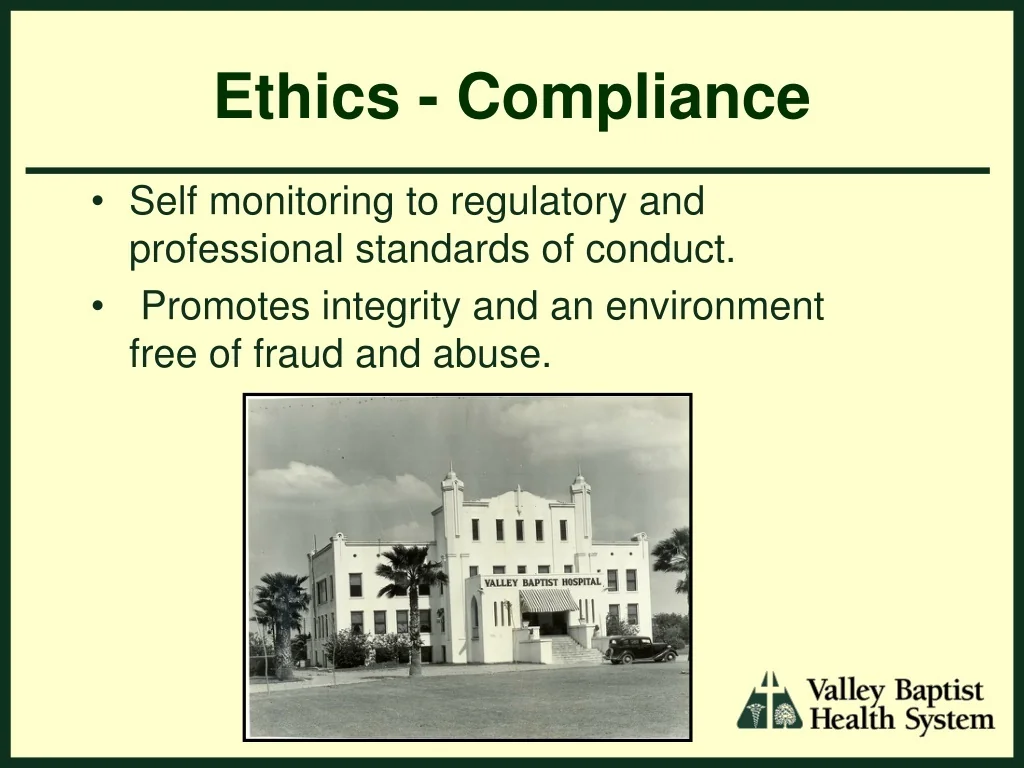
Ethics - Compliance • Self monitoring to regulatory and professional standards of conduct. • Promotes integrity and an environment free of fraud and abuse.
Gifts, Meals, and Other Stuff Health care representatives shall not give, ask for, or accept any gift, meal… …bribes, kickbacks, commissions, clothing, jewelry, discounts, tickets, honoraria, consulting fees …
DOING THE RIGHT THING • The Justice Department makes health care fraud & abuse investigation a top priority.
Examples of Violations 1. Taking anything which doesn’t belong to you; office or cleaning supplies, personal hygiene items, medical supplies. 2. Documenting or billing for services not provided, i.e., patient chargeable items or services. 3. Altering diagnosis codes for greater reimbursement.
Justifying … • “They won’t miss just one.” • “I’ll borrow it and bring it back tomorrow.” • “Insurance will pay for it.” • “It’s no big deal.” But the fact is…if it’s not paid for, it is stealing.
Take it personally The actions of a few can impact the rest of us…less $ for equipment, training… • State laws • Federal laws and regulations • Ethical and professional rules
Patient Privacy & Security Rules Health Insurance Portability and Accountability Act (HIPAA) Privacy Rule …personal medical information …shared with doctors, hospitals, clinics, insurance companies… is kept private and secure.
Civil Penalties How much could it cost me to call my friend and say, “Guess who I saw in the hospital!”?
Civil Penalties • $100/violation, up to a $25,000 fine and/or imprisonment for up to one year for unknowingly violating despite due diligence. • $1000/violation, up to a $100,000 fine and/or imprisonment for up to five years… for “reasonable cause”. • $500,000/violation, up to a $1.5 million fine and/or up to ten years imprisonment for…“willful neglect”.
Who is responsible for protecting patient privacy? STUDENTS doing clinicals and health system employees are responsible. Be careful who you talk about, what you talk about and where you talk about anything related to patient care. Access only what you need to know to do your job. We cannot repeat private health information heard on the job to anyone, unless our job requires it. It doesn’t matter if the patient has expired or moved away.
What is protected health information (PHI)? Past Present Future health condition of the individual Past Present Future health care given to the individual Payment information Any information that connects an individual to a health condition.
Minimum Necessary rule • Treating the patient • Disclosing to the patient • Disclosing to the Department of Health and Human Services (HHS) • Required by law Employees must make reasonable efforts to limit access to, or disclosure of protected health information to the minimum needed to know to do our jobs… except when:
Access and repeat… Only what you need to know! Only when our job requires it!
Day 1…“You saw Julio at the hospital?” Privacy • Be careful what you talk about, who you talk about and where you talk about things that are related to patient care. Day 2...“Mike saw Julio at the hospital!” Day 3...“Samantha said Mike saw Julio at the hospital!”
3 Security Standards Administrative: Processes, rules (who gets a password) Physical: Locked doors, location of monitor Technical: Passwords, log out timers
Consequences of Medical ID Theft Injury or even death from receiving incorrect medical treatment False medical and pharmaceutical bills False health insurance claims Denial of insurance claims Time and expense correcting false patient records
How Thieves Steal an Identity Dumpster Diving – rummage through trash looking for bills or other information Skimming – steal credit/debit card numbers when processing Phishing – pretend to be reputable companies and send spam or pop-up messages for victims to reveal personal information Changing address – divert billing statements to another address by completing change of address form Old-fashioned stealing – steal wallets, purses, mail, medical records, or bribe employees who have access to these records Pre-texting – use false pretenses to get personal information from any company that has that information
Student Responsibilities Follow procedures Protect medical information Report suspicious activity
CODE YELLOW CODE PINK An infant is missing - Known kidnap. code phone CODE MAP code phone CODE AMBER Missing child CODE RED Notification of disaster or mass emergency event. FIRE Smoke or smell of something burning. (R.A.C.E.) CODE BLUE ADULT cardiopulmonary arrest. CODE BLUE - PALS PEDIATRIC cardiopulmonary arrest.
Call Security in any emergency Learn Security’s phone number at the hospital you will be at. VBMC-Brownsville 698-1111 VBMC-Harlingen 389-1200
Fire Plan: Rescue the person(s) in immediate danger Alarm isactivated by pulling nearest box alarm & calling emergency number Contain fire and smoke by closing all doors and windows Extinguish the fire if safe to do so. Otherwise, evacuate
Pull pin at top of extinguisher • Aim nozzle at base of fire • Squeeze handle • Sweep from side to side Evacuate if the fire is too big, the air is unsafe to breathe, too hot or smoky, or if you risk being trapped and unable to escape.
Never block fire exits Follow department evacuation plan Exit signs lead out of the building. CODE GREEN • Emergency Evacuation
Utilities Management Essential patient care equipment plugged into RED OUTLETS. If power is interrupted, emergency generators provide power to RED OUTLETS. Call Security to report problems.
Medical Equipment Management Look at Maintenance Tag due date. Equipment brought from home must be tagged.User error can be life-threatening. Equipment used in patient care is assigned a preventive maintenance schedule by Clinical Engineering.
Hazardous Materials “Right to Know Station” contains Material Safety Data Sheets (MSDS)…containing information on hazardous chemicals you are using or may come into contact with. Master Copy in Emergency Department.
Blood, body fluids or infectious wastes must be disposed of in Red Biohazard bags or Red Biohazard containers. Everything put in these WILL BE BURNED UP! CAUTION! This symbol represents Infectious/Biohazard waste DO NOT DISPOSE OF THESE ITEMS IN CLEAR BAGS for REGULAR TRASH.
Security Report suspicious activity to Security Wear School I.D. badges Learn the Security Phone number for your hospital. VBMC-H 389-1200 VBMC-B 698-1111