Understanding Covalent Bonding: Chlorine and Molecular Compounds Explained
Explore the fascinating world of covalent bonding with a focus on chlorine molecules (Cl2) and their unique properties. Discover how electrons are shared between atoms, leading to the formation of strong covalent bonds while molecules remain electrically neutral. Learn about various molecular compounds, including water (H2O), methane (CH4), and ammonia (NH3), and understand why covalent compounds typically exist as gases or liquids with low melting and boiling points. This resource provides insights for students and educators alike.


Understanding Covalent Bonding: Chlorine and Molecular Compounds Explained
E N D
Presentation Transcript
Covalent Bonding Visit www.worldofteaching.com For 100’s of free powerpoints
2 Chlorine atoms Outer shells only
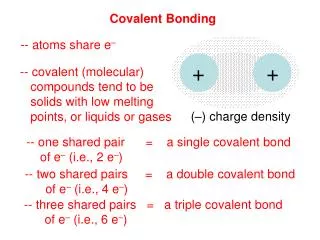
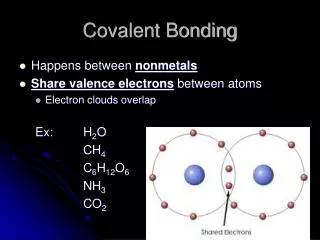
Chlorine molecule Cl2 Electrons shared Each outer shell has 8 electrons Forces (bonds) between atoms in the molecule very strong Forces between molecules very weak Molecular or covalent compounds are usually gases or liquids – they have low melting points and low boiling points Molecules have no overall electric charge
Cl Cl Cl Cl Chlorine Cl2 Cl Cl
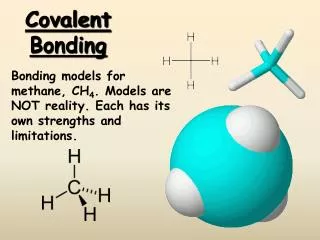
Covalent Bonds: Water H2O Methane CH4 Ammonia NH3 Hydrogen H2 Hydrogen Chloride HCl Oxygen O2 N.B. Oxygen has a double bond
16 O 8 Oxygen Oxygen atom 2,6
O O 2 Oxygen atoms (outer shells only) Double covalent bond