Digestive System
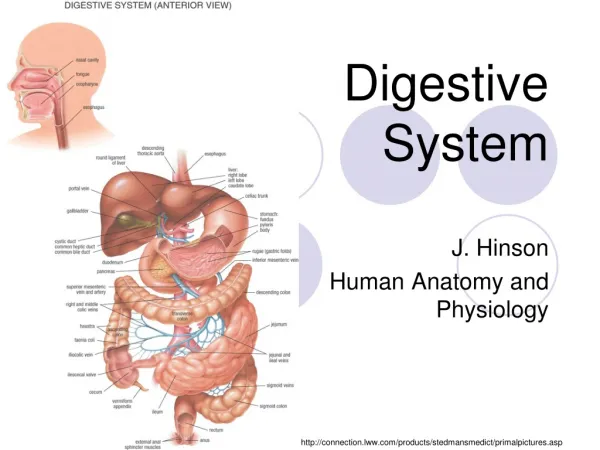
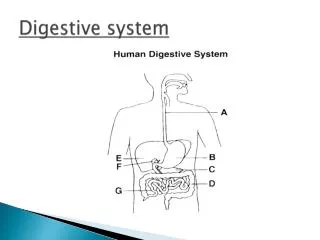
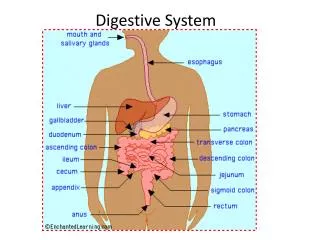
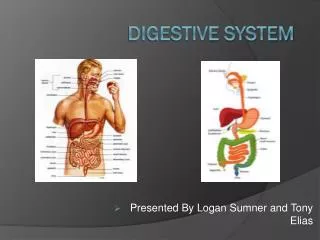
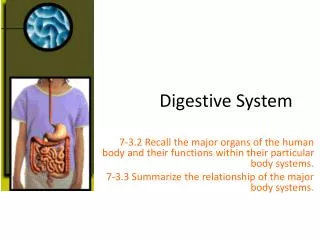
The digestive system, or G-I tract, consists of essential components including the mouth, pharynx, esophagus, stomach, small intestine, large intestine, and anus, measuring approximately 30 feet in length. Accessory organs such as teeth, tongue, gall bladder, salivary glands, liver, and pancreas support digestion through the secretion of saliva, bile, and enzymes. The GI process entails ingestion, propulsion, digestion, absorption, and defecation. Understanding the intricate roles of these organs and their interactions is crucial for comprehending overall digestive health.

Digestive System
E N D
Presentation Transcript
AKA • G-I Tract • Alimentary Canal
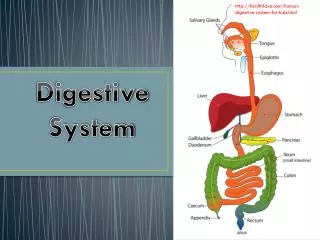
Overview • Consists of • Mouth, pharynx, esophagus, stomach, small intestine, large intestine, anus • About 30’ in length • Accessory Organs • Teeth, tongue, gall bladder, salivary glands, liver and pancreas • Glands secrete saliva, bile and enzymes
Process Includes • Ingestion • Mechanical – chewing, churning • Propulsion – swallowing and peristalsis • Chemical – breakdown via enzymes • Absorption – transport of end products into blood • Defecation – elimination as feces
Peritoneum and cavity • Parietal peritoneum surrounds cavity, lines body wall • Visceral surrounds organ • Serous membrane allows organs to glide/expand • Retroperitoneal refers to organs in the dorsal region • Peritonitis = inflammation of peritoneum • Perforation = infection
Mesentery • Double layer of peritoneum, holds organs in place • Omentums - protection • Lesser = fatty skin, superficial near the stomach • Greater = deeper, made of connective tissue, significant fat • Three layers of fascia – Skin, Fascia, mesentary
Histology • Smooth muscle - peristalsis • Glands with ducts • Nerves, arteries and veins
MouthPoint of Origin • Oral cavity • Tongue • Soft and hard palate • Uvula • Oropharynx • Epiglottis • Larynx/pharynx • Esophagus
Salivary glands • Produce saliva, a mixture of water, ions, mucous, and enzymes • Dissolve food • Wets food to help bind it to become a bolus • Neutralizes acids, helps growth of beneficial bacteria • Intrinsic –in tongue, palate, lips and cheeks • Extrinsic = outside mouth • Parotids • Submandibular • Sublingual
Pharynx • Oso • Laryngopharynx • Lined with epithelial cells for protection
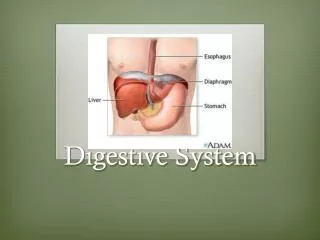
Esophagus • Muscular tube • Propels swallowed food to stomach • Passes through diaphragm (esophageal hiatus) into abdomen • Join the stomach at cardiac orifice • Cardiac sphincter prevents reflux or regurgitation of acid
Stomach • Food churned into chyme; a paste • Secretes pepsin – a protein digesting enzyme and HCl • Waters, electrolytes, some drugs absorbed through stomach • Anatomy • Cardiac orifice, fundus, lesser and greater curvature, pylorus • Rugae = numerous longitudinal folds of mucosa which flatten as stomach fills, allows expand
Small Intestine • Longest part of alimentary canal • Most enzymes involved in small intestine come from pancreas • Three divisions • Duodenum – 5% • Jejunum – 40% • Ileum – almost 50%
Duodenum • Receives digestive enzymes from pancreas • Bile from gall bladder and liver • Almost all nutrients are absorbed in small intestine • Large surface area, great length
Gall Bladder • Cystic duct • Bile duct – empties into small cystic duct • Secrete bile for duodenum digestion • Bile – Right and Left hepatic ducts to common cystic duct to Gall bladder for storage • From GB to bile duct to duodenum
Pancreas • Exocrine gland – produces most enzymes for digestion in small intestine • Endocrine function = produce hormones that regulate levels of sugar in the blood • Main pancreatic duct
Large Intestine • Most material has been digested by the time it reaches LI • 12-24 hours in large bowel • Little breakdown • Performs some absorption, especially water • Components • Ascending colon • Transverse colon • Descending colon • Sigmoid to rectum and anus
Cecum and appendix • Cecum is a small sac (blind pouch) • Valve prevents a back up of fecal matter to ileum • Appendix • Lymph tissue neutralizes bacteria • Diverticulosus – a small outward herniation of colon, especially sigmoid • Diverticulitis – infection with leaks into peritoneal cavity may lead to peritonitis
Anal Canal • ANS balance between defecation or not • PNS = increase movement • SNS = decrease • Voluntary control via external sphincter muscles
Liver • Largest gland in the body (1.4 kg – 3 lbs.) • Produces bile • Stored in GB • Emulsifies fats • Involved in metabolism • Diaphramatic and visceral surface • Right and left lobes • Porta hepatis = major vessels and nerves • Right and left hepatic ducts, common bile, common
Study Points • Know the components of GI Tract • Know the peritoneum • Understand smooth muscle control • Know the various ducts and how they connect to specific organs • Understand the role of the stomach v. small intestine v. large intestine