
French Revolution
E N D
Presentation Transcript
French Revolution Notes
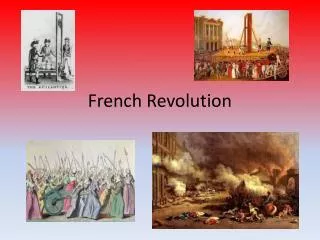
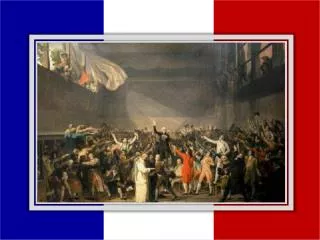
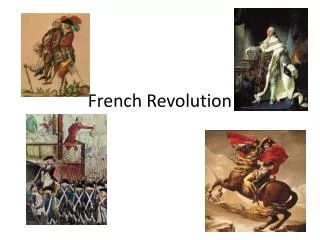
French Revolution Key Words • Estates (classes of people) • National Assembly • Tennis Court Oath • King Louis XVI (executed) and his wife Marie Antoinette • Reign of Terror • Madame Guillotine • Maximilian Robespierre
Three Phases of the Revolution • Liberal Phase • Characterized by a non-violent approach to diplomacy • Radical Phase • Violence against the established order • Thermidorian Reaction • Phase of going back to Christian and old French culture
Economic Causes of Revolution • Bad harvests • Food shortages • Unemployment • General poverty • Government financial collapse
Liberal Phase • May 5, 1789 • Question of voting • Third Estate (the most populous “class” of people) called themselves the National Assembly with the goal of drawing up a Constitution w/ a monarchy and legislative assembly
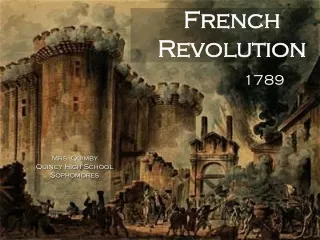
Liberal Phase • Fall of the Bastille • Royal troops turned on Louis XVI • He created a National Guard • Peasant rebellions began to break out • Great Fear SUMMER OF 1789
Liberal Phase:Goals of National Assembly • End relics of feudalism • Made clerics and nobles pay taxes • Calm down the peasants
Liberal Phase • March on Versailles • Royal family had to move back to Paris • King forced to accept movements of the National Assembly • Church lands seized
Liberal Phase • Constitution of 1791 • Monarch is still executive • Legislative Assembly • Sovereign power • Active/passive citizens • Electors This gov’t failed and leads to radical phase
National Convention • Dominated by political radicals • Killing in order to end overcrowded prisons • First met in September 1792 • Ended up as the ruling body of France • Executed the king
COPS • Committee of Public Safety • Goal was to control rebel forces throughout France • Issued draft for French Army • Inclusion of Revolutionaries in the Army spread revolutionary ideals throughout Europe
COPS • Reign of Terror • Killed anyone seen as an enemy of the Republic • No one class predominately killed
Dechristianization • Temple of Reason • New calendar • Ended Christian holidays • Represented radical break from past controls • Removed word saint • Priest married
End of Radical Phase • Radical attitude lessened • Ended COPS and executed leaders • Ended dechristianization process
What was accomplished • Protection of France from foreign invasion • No counterrevolution took place • Example of use of violence • Argument about the extent to which governments can do that
Thermidorian Reaction • Terror ended • White Terror began • Churches reopened • Laissez-faire economics • New Constitution in 1795 • Thermidorian Reaction (after the Rein of Terror)
Constitution of 1795 • National legislative assembly: • Council of 500 • Initiated legislation • Council of Elders • Accepted or rejected laws • Electors chose members • electors owned or rented property worth at least 100 days labor • Electors chosen by active citizens
The Directory • 5 man executive assembly • Council of 500 gave list to Council of Elders who chose • 2/3 of members of this system must have sat on the National Convention
New System • PPl didn’t like that members were part of Convention • Those in gov’t were corrupt and rich • Royalists wanted to restore monarchy • Left agitated by economic problems • Created coup d’etat in 1799 of Napoleon