Stock Market Basics: Understanding Investments and Terms
150 likes | 254 Vues
Explore the world of stock market investing with this comprehensive guide. Learn about types of stocks, dividends, capital gains, bonds, mutual funds, and stock exchanges. Discover how to navigate securities markets, the role of stockbrokers, and factors influencing stock prices. Gain insights into IPOs, stock splits, and market trends like bulls, bears, and pigs. Start your journey to becoming a savvy investor today!


Stock Market Basics: Understanding Investments and Terms
E N D
Presentation Transcript
The Stock Market • Investing in Stocks & Bonds • Stocks - shares of ownership • Stocks & bonds are also known as SECURITIES
Two Types of Stock • Common Stock • All profit-making corporations must offer • Holders participate directly or indirectly in the management of the company. • Receive DIVIDENDS (return on their investments) • Preferred Stock • Gives holders certain privileges • Paid dividends first • Generally no voice in the company
Stock Terms • Blue Chip Stocks • Refers to the stocks of the largest, most consistently profitable corporations. • Income stocks • Stocks that pay dividends regularly • Growth Stocks • Pay little or no dividend, while reinvesting their profit
The Value of Stock • Capital Gains • The profit from selling stock at a higher price than they paid for it. “Timing it right” • Buy low, sell high • Capital Losses • The lost money from selling stock at a lower price than you paid for it. • Dividends • Portion of the company’s profit paid out to its shareholders
Those involved in stock transactions: • Stockbroker • A dealer who specializes in stock transactions. • Stockholder (Shareholder) • One who owns stock.
Mutual Funds • A professionally-managed form of collective investments that pools money from • many investors and invests it in stocks, bonds, and other securities. • Bonds • Written promises to pay back by the issuer of the bond to the lender plus interest
Stock Exchanges • Stock exchanges are trading markets where stocks & bonds are bought and sold. • NYSE • AMEX • NASDAQ • TSX
Securities Markets • Deal primarily with stocks and bonds • Purpose is for businesses to acquire investment capital • Ex. NYSE/NASDAQ • Not all markets are the same. Different rules for buying and selling. • NASDAQ • Computer based, deals with technology and new companies. Growth stocks. • NYSE • Floor-based, brokers represent investors. Deal with blue chip companies. Income stocks.
Regulation of Financial Markets • Assurance that those who conduct business with the public do so in a professional and ethical manner in • compliance with industry rules. • Ex. Securities & Exchange Commission (SEC)
Factors that affect stock prices: • Actions of investors • Business conditions • Government actions • Economic indicators • International events and conditions
Additional Terms: • Initial Public Offering (IPO) - To take a company public, to make it possible for investors to buy the stock. • Stock Split - More shares created at lower price per share; stockholders profit if price goes up. • Reverse Split - Exchange more stocks for fewer stocks, and the price increases accordingly. • .
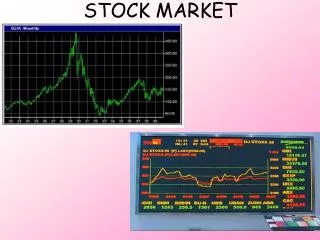
Bulls, Bears, and the Pigs • The Bulls - A bull market is a stock market with rising prices over an extended period of time. • The Bears - A bear market is a stock market with falling prices over an extended period of time. • The Pigs - A pig is a greedy animal. Stock buyers who try to make every last cent of gain on an investment • may end up with losses.