Understanding the Title
100 likes | 223 Vues
Dive into the serene beauty of Li Bai’s poem "月望静夜思" as it captures the tranquil essence of night. The imagery of moonlight illuminating the ground evokes memories and deep contemplation of one’s hometown. As the first character observes the night, the second reflects on time, prompting the third to engage in deep thought. This timeless piece illustrates the intersection of nature and personal nostalgia, showcasing Li Bai's genius in traditional Chinese poetry. Discover more about this famous poet and his enduring influence in the world of literature.


Understanding the Title
E N D
Presentation Transcript
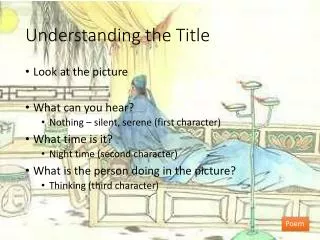
Understanding the Title • Look at the picture • What can you hear? • Nothing – silent, serene (first character) • What time is it? • Night time (second character) • What is the person doing in the picture? • Thinking (third character) Poem
月 望 静夜思 李白(701-762) 床前明月光, 疑是地上霜。 举头望明月, 低头思故乡。 头 床 地 Watch A Video!! Translation
Bright Back
月光 • http://www.youtube.com/watch?v=nT7_IZPHHb0 Back
疑 v. To suspect, to doubt Back
霜 Back
举头 低头 Back
故乡 Back
李白 Li Bai(701-762) A Chinese poet acclaimed from his own day to the present as a genius and romantic figure who took traditional poetic forms to new heights. He and his friend Du Fu (712-770) are the two most prominent figures in the flourishing of Chinese poetry in the mid-Tang Dynasty that is often called the "Golden Age." Back