
SlideServe
Menu
Préférences
© SlideServe · v2026

Grade 7 Language Arts

byron avatar
11 diapositives · 368 Views · Aug 23, 2014

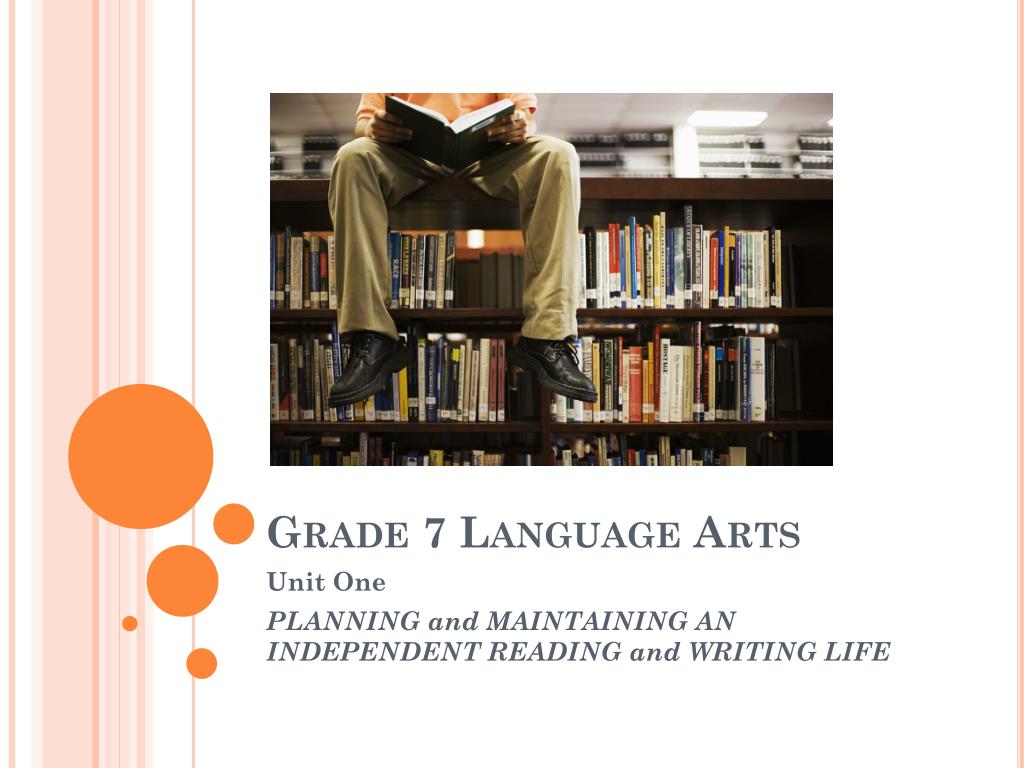
Grade 7 Language Arts. Unit One PLANNING and MAINTAINING AN INDEPENDENT READING and WRITING LIFE.
Grade 7 Language Arts - slide 1
01 / 11Grade 7 Language Arts
1 / 17

Télécharger la présentation

Grade 7 Language Arts
Une image / un lien ci-dessous est fourni (tel quel) pour télécharger la présentation

Politique de téléchargement : le contenu du site vous est fourni TEL QUEL pour votre information et votre usage personnel ; il ne peut être vendu, concédé sous licence ni partagé sur d’autres sites sans l’accord de son auteur.Le contenu vous est fourni TEL QUEL, pour votre information et votre usage personnel uniquement. Téléchargez la présentation en cliquant sur ce lien. Lors du téléchargement, si vous ne parvenez pas à télécharger une présentation, l’éditeur a peut-être supprimé le fichier de son serveur.Pendant le téléchargement, si vous ne parvenez pas à obtenir une présentation, le fichier a peut-être été supprimé par l’éditeur.

F I N

Plus de contenu associé

Transcription de la présentation
  1. Grade 7 Language Arts Unit One PLANNING and MAINTAINING AN INDEPENDENT READING and WRITING LIFE

  2. September*Word A Day 5 min.*Writing Mini Lesson: 10 min. Paragraph Structure *IRLN: Story Vocabulary 10 min. Lesson One Passing and Interviewing BooksReintroducing and Customizing the Writing Notebook: Collecting Ideas as a Writer 25 min.

  3. PETTY • ADJECTIVE • When we divided the lunch bill, it seemed petty to argue over who would pay the extra five cents.

  4. The Building Blocks of WritingParagraph Structure: Ways to Organize Sentences and Paragraphs 2W

  5. IRLN: Story Vocabulary 1. Prepare pieces for book 2. Glue into booklet 3. Write Vocabulary names on the outside of pieces. 4. Write the definition on the inside. • Plot – the chain of events that make up a story • Setting – the time and place • Complications – problems that arise as characters struggle to reach their goals of a story • Protagonist – the main character in a story • Antagonist – the character or force in conflict with the protagonist

  6. Interviewing a Book • Does the title sound interesting? • What do I know about the author? • Does the blurb on the back of the book sound interesting? • Is the book a genre I like to read? Some books have words such as “Mystery,” “Memoir,” or “Fiction” in the corner of the back covers. • Has the book won any awards? • Is the book too hard? I will try the beginning and read a page from the middle to decide.

  7. Work Period • Find your “Book Pass” worksheets • You will have one minute to interview each book using some or all of the questions from the “Interviewing a Book” chart as a guide. • A book pass is another way to be exposed to texts available in our classroom library. A book pass requires you to use your book-interviewing skills. A book pass is a chance to find books you’d like to read.

  8. Sharing/Closure • *With your elbow partner discuss your choices. • *Who will volunteer to share some titles they found interesting today? • *Why might you select these books to read?

  9. Collecting Ideas as a Writer To view the world as writers, writers consistently observe and record their world. Writers set up and keep writing notebooks to collect ideas, stories, and responses to readings; make observations; keep notes; and try new ideas. The goal of a writer includes taking an idea through the writing process all the way to sharing and publication.

  10. “Turn and Talk” with one another about possible ideas to store in your writing notebooks. Ideas