Download
1 / 2
20 likes | 111 Vues
This lab experiment involves calculating the mole ratio of tin and oxygen in a crystalline product, predicting an empirical formula for the tin-oxygen compound, determining the reaction of tin with nitric acid, and discussing the implications of the Bean Lab concepts on the study. The findings include the empirical formula and name of the product, along with insights into the limitations and potential sources of error in the experiment.

E N D
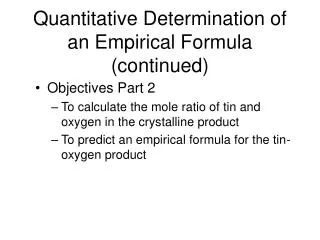
Quantitative Determination of an Empirical Formula (continued) • Objectives Part 2 • To calculate the mole ratio of tin and oxygen in the crystalline product • To predict an empirical formula for the tin-oxygen product
Conclusions • Predict the empirical formula for the tin-oxygen product and name the product. • Summary: -Describe the reaction of tin and nitric acid. -How do the concepts learned in the Bean Lab help to determine the mole ratio of tin and oxygen. -Mole ratio results, empirical formula and name of product -Limitations/ sources of error