Download

1 / 5
50 likes | 174 Vues
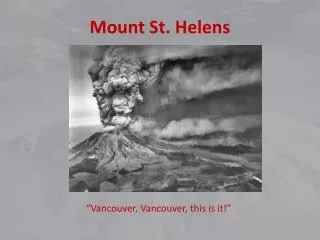
On May 18, 1980, Mount St. Helens erupted, releasing 520 million tons of ash, causing $1.1 billion in damage, and destroying over 200 homes. The eruption had devastating effects within a 230 square mile blast zone, killing millions of salmon and thousands of big game animals, while also negatively impacting the climate. This event highlights the importance of using heat and fire-resistant materials in construction, preparing for volcanic activity, and utilizing technology for early warnings to safeguard lives and property during similar disasters.

E N D
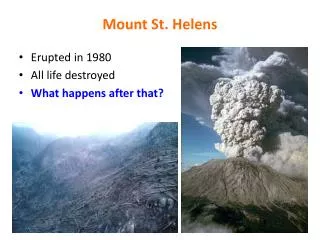
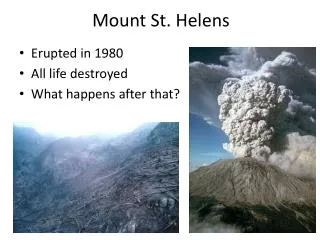
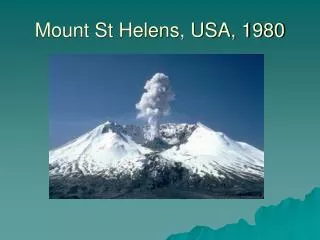
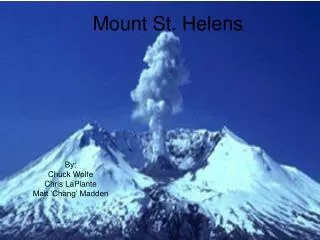
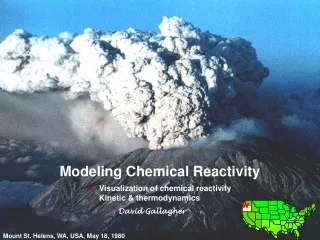
HISTORIAN- Mount St. Helens. • Erupted on May 18th, 1980 at 8:32 a.m. • 520 million tons of ash into air. • $1.1 billion in damage. • 200 homes destroyed. • Everything with 230 sq. miles of blast zone were affected in some way. • Millions of Salmon and about 7,000 big game animals were killed. • Climate was affected due to the amount of ash in the air. The ash left a town named Spokane, 250 miles away, in complete darkness.
Architect • important be suggest to build homes with heat and fire resistant material to help it better hold up in the case of an emergency. • materials include rock wool, gypsum boards, asbestos cement, prelate boards, calcium silicate boards, treated lumber plywood, and crust formation • also could build a moat or ditch that has the lava flow away from the house, instead of directly towards it • If too close to the volcano then best thing would be to move to a new location • technology helps to pre-warn people of a volcano so that they have more warning • with mobile electronic devices more people are alerted of a catastrophe • able to tell the extent of the explosion, how much lava was spewed so they know what houses would be affected. • cause I help to keep homes safe during a volcano
American Red Cross • If another catastrophic event happens then follow these steps so you can keep your family and belongings safe. • before any events happen get insurance on cars, homes and health • Make sure you have an underground shelter to be sure you are safe • Make sure you have a TV so you can watch for warnings and watches for any catastrophic events • When you hear an evacuation, evacuate immediately so you don’t get hurt
Bibliography • U.S. Census Bureau. TM-POO2. Persons per square mile. January 12, 2010. http://www.factfinders.census.gov/servlet/. • HIVA. Hazard Identification and vulnerability assessment. April 2001. http://www.chalendem.org/document/washington/. • USGS. Mount St. Helens-from the 1980 eruption to 2000. March 1, 2005. http://www.pubs.usgs.gov/fs/2000/fso36-00/. • How Volcanoes Work. Mt. St. Helens Eruption (1980).http://www.geology.sdsu.edu/how_volcanoes_work/. • Smith, Valerie A. A Return to Beauty. http://www.olywa.net/radu/valerie. • USGS. Mount St. Helens on July 22nd, 1980. http://www.google.com/imgres?imgurl=http://volcano-pictures.info/. • Amar Andalkar. Mount Saint Helens. http://www.google.com/imgres?imgurl. April 25th, 2005. • Hospital Districts in Washington State. http://www.mrsc.org/subjects/governance/spd/spd-hospital.aspx • Mount Saint Helens. http:en.wikipedia.org/wiki/Mount_St.Helens • Google Earth. http:www.googleearth.com • What Causes Volcanos?http://library.thinkquest.org/C0112681/Eng/normal/kids/cause.htm