Endocrine System
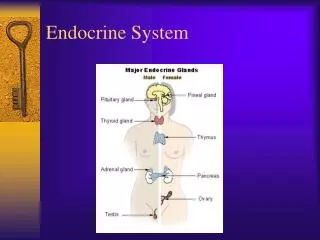
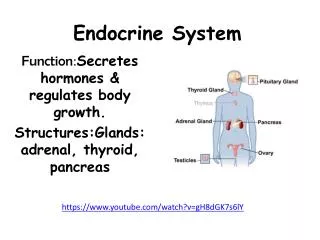
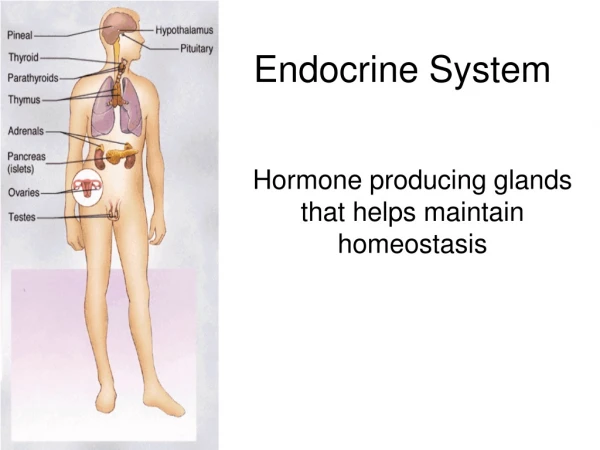
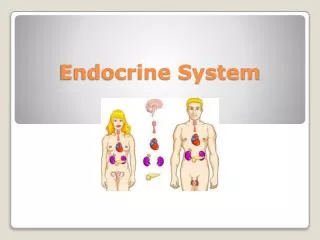
The endocrine system is a network of glands that secrete hormones, serving as chemical messengers throughout the body. The pituitary gland, known as the "Master Gland," regulates other hormones. Key glands include the thyroid, adrenal, pancreas, ovaries, and testes, each producing hormones crucial for metabolism, stress response, and reproductive functions. This system governs puberty, facilitates sperm and egg production, and regulates menstrual cycles, ensuring reproductive health. Understanding these elements is vital for recognizing health issues like infertility or hormonal imbalances.

Endocrine System
E N D
Presentation Transcript
Hormone- a chemical messenger that is released into the blood stream. • Gland- a group of cells or an organ that secretes hormones. • Pituitary Gland- produces a hormone that controls all other hormones, located in the brain. Also known as the “Master Gland”. Endocrine System
Thyroid- produces thyroxine, which controls metabolism and body temperature • Parathyroid- control the amount of calcium and phosphorus in the body • Adrenal- controls the adrenaline hormone which helps us in emergency situations. Also controls the body’s water balance Endocrine System
Pancreas- produces insulin needed to break down glucose to be absorbed into the blood. Also part of the digestive system • Ovaries- produces the female sex cell, the egg. Estrogen controls the development of secondary sex characteristics • Egg/Ovum- female sex cell. One egg cell produced by the ovaries once a month Endocrine System
Testes- produces the male sex hormone, testosterone. This is also controls the development of secondary sex characteristics. • Sperm- is the male sex cell - The combination of egg and sperm will result in conception and soon will be developing fetus. Endocrine System
Puberty- time in which a teenager will have physical and emotional changes due to the releasing of hormones. Usually begins between ages 12-15. Endocrine System
Testosterone- male hormone which causes sperm production. Allows for physical changes- broad shoulders, deepened voice, muscular development and hair growth. • Testes/Testicles- 2 small glands which produce sperm. In order to survive, sperm must be kept at lower temperatures. • Scrotum- holds the testes and protects the sperm from high temperatures. Male Reproduction
Epididymis- tube outside the testes which temporarily stores sperm. Allows them to mature here. • Vas deferens- the tube which connects the epididymis to the urethra. This is where other fluids are mixed with sperm. • Seminal Vesicle- produces the other fluids that are mixed with sperm. Male Reproduction
Prostate Gland and Cowper’s Gland- other fluid production occurs • Urethra- the tube which extends from the bladder and each vas deferens through the penis, outside of the body • Penis- external reproduction organ. Composed of tissue and blood vessels, which allow for erection and ejaculation of semen Male Reproductive
Sterility- a condition when a person is unable to reproduce • Testicular Cancer- Age 15-34 is the most common. Signs- enlarged testicle, lumps or nodules. Self examinations should be done once a month. Male Reproductive
Estrogen and Progesterone- hormones released by the pituitary gland during puberty. Produces secondary sex characteristics- breast development, widening of the hips and hair growth. Female Reproductive
3 Major Functions • Produce egg cells or ova • Reception of sperm for fertilization • Provide nourishment and protection for a fertilized ovum until it’s ready to live outside the body Female Reproductive
Ovaries- female sex glands that house ova and produce hormones. • Born with over 1 million immature ova • Will release 300-500 in her lifetime • Ovulation- releasing of one mature ovum each month. This begins around puberty. Ovaries alternate from month to month. Female Reproductive
Fallopian Tube- when an ovum is released, it moves along in this tube to the uterus. • Finger or hair like projections draw and ovum from the ovary and into and through the fallopian tube. • Fertilization can occur if a sperm are present in the fallopian tube when the ovum is released into it. Female Reproductive
Fertilization- when one sperm cell unites with the ovum • Uterus- small, muscular, pear shaped organ about the size of a fist. • Rich with blood vessels • Thickness varies depending upon hormones present • Zygote- a fertilized ovum attaches to the uterine wall and lives here for 9 months Female Reproductive
Cervix-end of the uterus, which is in the vagina, opens during labor. • Major site of cancer in women. PID/HPV • Papsmears • Vagina- Also called the birth canal, is a muscular and elastic tube. This is where sperm is deposited during sexual intercourse. Female Reproductive
Menstruation- when the lining of the uterus is shed. • 2-3oz of blood and tissue leaves the body • Lasts 3-5 days • 28 day cycle is the norm • The Cycle • Days 1-4 Lining of the uterus, menstruation • Days 5-12 Uterine wall thickens, egg about to be released • Days 13-14 Ovulation occurs, egg is released • Days 15-28 Egg travels down fallopian tube into uterus. If not fertilized, menstruation will occur. If fertilized, a baby will began forming. Female Reproductive
Health Issues • Menstrual cramps- mild cramping can occur • Light exercise, a warm bath or a heating pad can relieve these. 2. Premenstrual Syndrome (PMS)- A variety of symptoms that effect different people differently. Mild to severe • Bloating, mood swings, fatigue and weight gain • Hormonal imbalances or nutritional deficiencies Female Reproductive
3. Toxic Shock Syndrome- Bacterial disease that can occur in women who use tampons. • Change every 3-4 hours • Symptoms- fever, vomiting, dizziness, flu like symptoms Female Reproductive