Advanced Vibration Analysis for Improved Wellhead Monitoring and Safety (March 2010)
This presentation discusses the implementation of vibration analysis to enhance wellhead monitoring in congested platforms, addressing increasing HSE issues and well shut-ins. It introduces an innovative anti-collision system utilizing vibration sensors on offset wells to establish baseline drilling vibrations. The methodology includes measuring vibrations during drilling, logging changes, and generating real-time data for better decision-making. The presentation highlights equipment used, test results, and outlines future steps, with an emphasis on the importance of reducing noise and improving sensor accuracy for effective monitoring.

Advanced Vibration Analysis for Improved Wellhead Monitoring and Safety (March 2010)
E N D
Presentation Transcript
Well avoidance with vibration analysis March 2010
Today presentation • Background • Basic Concept • Equipment used • Test results • Going Forward
Background • Increasing number of congested platforms • Increasing number of HSE issues • Increasing number of well shut-ins • An anti-collision wellhead monitoring system • SPE 22123BP
Basic concept • Vibration sensors on offset wells • Establish baseline “drilling” vibration • Drill ahead, measuring offset well vibration • Log changes in vibration relative to subject well • Calculate “movement” away/towards offset wells • Generate actual distance to generate RT TC plot
Test results • Limited physical separation • GWD main survey reference • Conductor hammered to refusal • Baseline vibration taken with pumps on Slot to be drilled
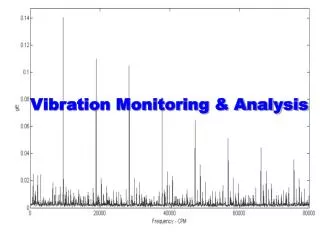
Conductor driving • Measured whilst driving conductor • Note Drivevs refusal response • Can refusal be predicted?
Close Approach • Baseline Measurement • Remove Pump noise • Normalize power at set frequency band Close approach time Pumps only
Going forward • More tests • Multiple sensors • Reduce signal to noise ratio • Off line analysis of multiple sensors • RT application tested
Questions? March 2010