
Canada’s Journey: From Early Rivalries to Bilingual Nation
E N D
Presentation Transcript
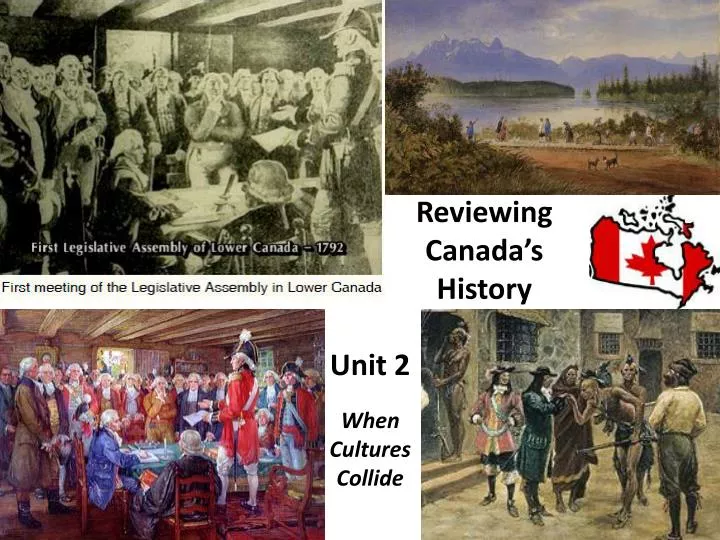
Reviewing Canada’s History Unit 2 When Cultures Collide
During the early settlement of North America, the French and British were rivals .
An important step in Canada’s history was the Quebec Act, which gave French people in Quebec the right to speak French, practice their own religion and follow their own customs.
In 1867, Canadians peacefully won the right to control their own government without fighting a war.
After its “peaceful revolution,” Canada saw years of growth and change.
Canadians entered World War I since they were subjects of Great Britain.
After World War II, products made by Canadian factories found a ready market in Europe and the United States, which made for a prosperous Canada.
Key Term: When a country has two official languages, it is bilingual New laws passed in 1969 made Canada a bilingual country.
Changes in the Canadian constitution in 1982… …meant that Canada was completely independent
Since 1867, Canada has had the right to control their own government, but it was still a dominion, or subject to Great Britain. In 1982 this came to an end.