Understanding Chemical Bonding and Periodic Trends in Allied Health Sciences
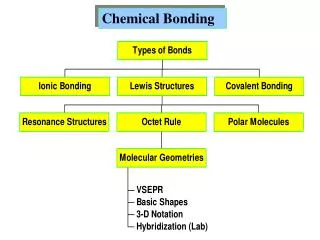
This introduction to chemistry focuses on chemical bonding and the periodic trends that affect bonding types in the context of allied health sciences. Key concepts include the classification of bonds as ionic, covalent, or metallic based on atomic characteristics and electronegativity. Utilizing the periodic table, we explore trends such as atomic radii, metallic character, ionization energy, and electron affinity. Through practical examples, students will learn to predict atomic properties and chemical behavior based on location within the periodic table, which is crucial for understanding biological and chemical interactions in healthcare.


Understanding Chemical Bonding and Periodic Trends in Allied Health Sciences
E N D
Presentation Transcript
Introduction to Chemistryfor Allied Health SciencesKirk HunterChemical Technology DepartmentTexas State Technical College Waco
Predicting Bond Type • Metallic character of the atoms • Electronegativity
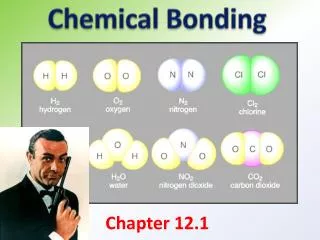
Metallic character of the atoms • Metal + nonmetal Ionic Bond • NaCl – ionic bond • Nonmetal + nonmetal Covalent Bond • CO2 – covalent bond
TRENDS • The Periodic Table can be used to predict trends. • Atomic radii • Metallic character • Ionization energy (electron affinity)
TRENDSAtomic Radii • Increases down a group • Increases from right to left
Trends Atomic radius increases
Example Which has a larger atomic radius, Na or K? Answer: Potassium, K is below sodium, Na in Group IA. Potassium’s atomic radius is larger.
Example Which has a larger atomic radius, Ca or Ni? Answer: Calcium, Ca, is to the left of nickel, Ni in Period 4. Calcium’s atomic radius is larger.
TRENDSMetallic Character • Increases down a group • Increases from right to left
Trends Metallic character increases
Example Which has the most metallic character, Sn or Pb? Answer: Lead, Pb, is below tin, Sn in Group IVA. Lead has more metallic character.
Example Which has the most metallic character, Ag or Sr? Answer: Strontium, Sr, is to the right of silver, Ag, in Period 5. Stronium has a more metallic character.
TRENDSElectronegativity(Electron Affinity) • Increase – bottom to top of Group • Increase – left to right in Period
Trends Electronegativity increases (Electron affinity)
Example Which has a higher ionization energy (electronegativity), Li or Na? Answer: Lithium is above sodium in Group IA. Lithium has a higher ionization energy (electronegativity).
Example Which has a higher ionization energy (electronegativity), N or O? Answer: Oxygen is to the right of nitrogen in Period 2. Oxygen has a higher ionization energy (electronegativity).