Guidelines for Personal Protective Equipment (PPE) When Handling Flying Foxes
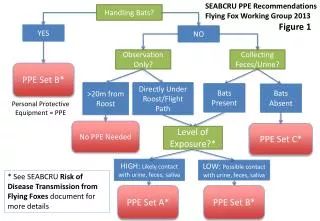
This document outlines recommended practices for using Personal Protective Equipment (PPE) when interacting with flying foxes. It categorizes different levels of exposure (high and low) based on potential contact with bat urine, feces, and saliva. Depending on the circumstances (i.e., distance from roosts and presence of bats), various PPE sets (A, B, C) are advised. This guidance aims to minimize the risk of disease transmission while working safely around these animals. For detailed risk assessments, refer to the SEABCRU resource.

Guidelines for Personal Protective Equipment (PPE) When Handling Flying Foxes
E N D
Presentation Transcript
SEABCRU PPE Recommendations Flying Fox Working Group 2013 Figure 1 Handling Bats? YES NO Collecting Feces/Urine? Observation Only? PPE Set B* >20m from Roost Directly Under Roost/Flight Path Bats Present Bats Absent Personal Protective Equipment = PPE No PPE Needed PPE Set C* Level of Exposure?* HIGH: Likely contact with urine, feces, saliva LOW: Possible contact with urine, feces, saliva * See SEABCRU Risk of Disease Transmission from Flying Foxesdocument for more details PPE Set A* PPE Set B*