How Geographic Factors Influence Climate: Elevation, Latitude, Winds, and Ocean Currents
60 likes | 196 Vues
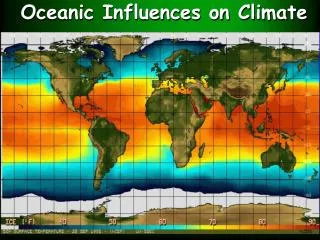
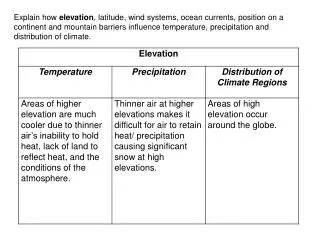
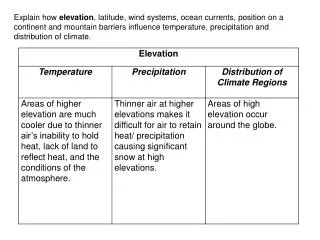
Geographic factors play a crucial role in shaping climate patterns around the world. Elevation affects temperature, as higher altitudes generally lead to cooler climates. Latitude determines the amount of solar energy received, influencing temperature and seasonal variations. Wind systems distribute moisture, impacting precipitation. Ocean currents regulate temperature and precipitation patterns by transporting warm or cold water. The position on a continent can lead to variations in climate, while mountain barriers can block air masses and create rain shadows, significantly influencing local climate conditions.


How Geographic Factors Influence Climate: Elevation, Latitude, Winds, and Ocean Currents
E N D
Presentation Transcript
Explain how elevation, latitude, wind systems, ocean currents, position on a continent and mountain barriers influence temperature, precipitation and distribution of climate.
Explain how elevation, latitude, wind systems, ocean currents, position on a continent and mountain barriers influence temperature, precipitation and distribution of climate.
Explain how elevation, latitude, wind systems, ocean currents, position on a continent and mountain barriers influence temperature, precipitation and distribution of climate.
Explain how elevation, latitude, wind systems, ocean currents, position on a continent and mountain barriers influence temperature, precipitation and distribution of climate.
Explain how elevation, latitude, wind systems, ocean currents, position on a continent and mountain barriers influence temperature, precipitation and distribution of climate.
Explain how elevation, latitude, wind systems, ocean currents, position on a continent and mountain barriers influence temperature, precipitation and distribution of climate.