Understanding Heating Systems: Types, Heat Engines, and Heat Movers Explained
Explore the various types of heating systems, including wood or coal burning stoves, forced air, radiators, electric, and solar options (both passive and active). Learn about heat engines that convert thermal energy into mechanical energy, distinguishing between external and internal combustion engines. Additionally, discover heat movers like air conditioners and refrigerators that transport thermal energy using mechanical energy. We also delve into heat pumps, which serve as two-way heat movers, perfect for temperate climates.

Understanding Heating Systems: Types, Heat Engines, and Heat Movers Explained
E N D
Presentation Transcript
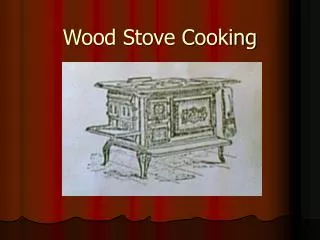
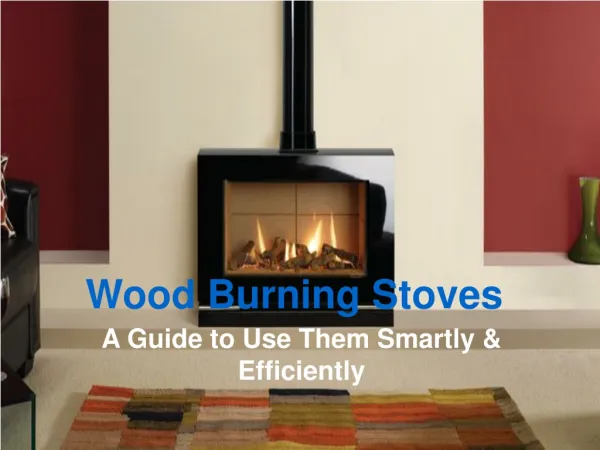
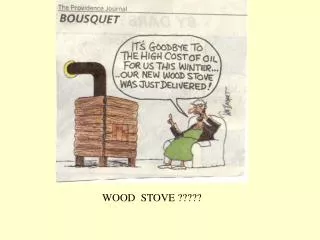
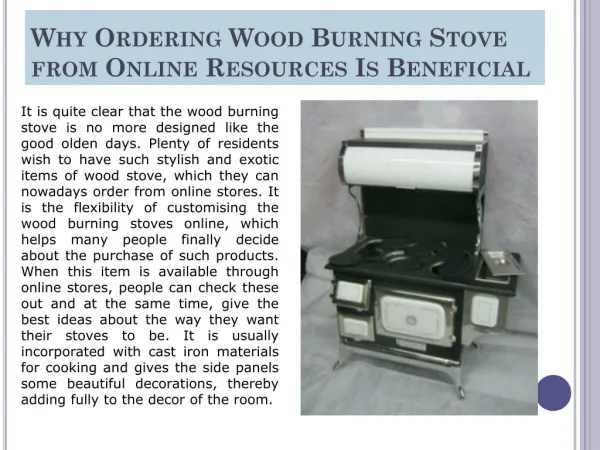
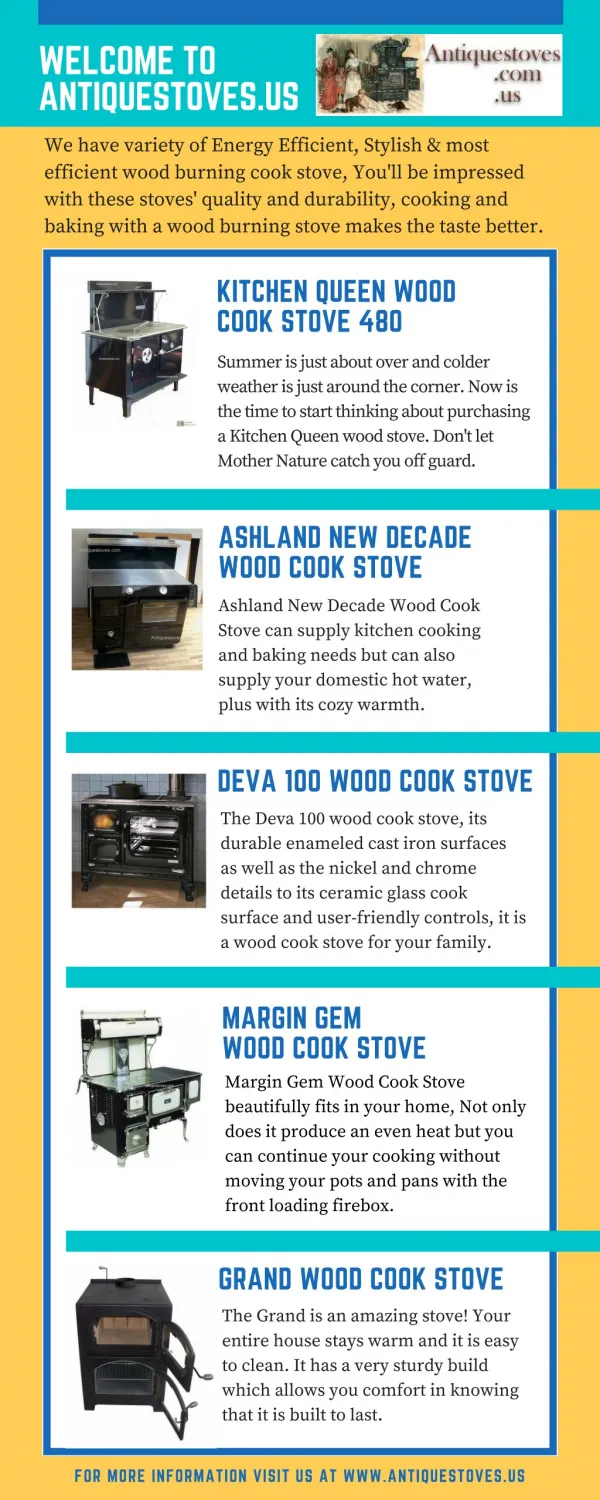
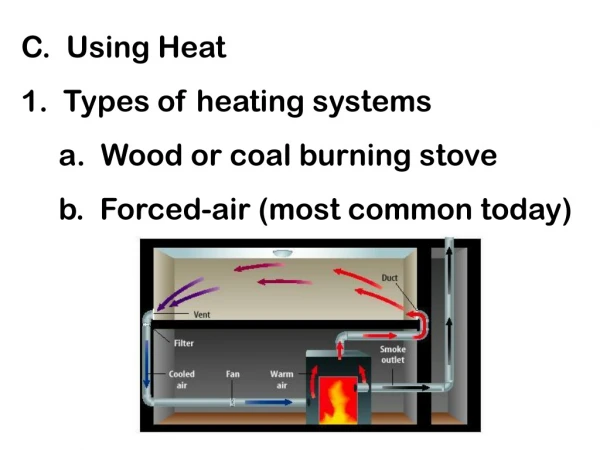
C. Using Heat 1. Types of heating systems a. Wood or coal burning stove b. Forced-air (most common today)
c. Radiator d. Electric e. Solar 1) Passive (lots of south windows) 2) Active (solar panels)
2. Heat engines combustion thermal energy mechanical energy a. External combustion engine (steam engine)
3. Heat movers a. Devices that remove thermal energy from one place and transfer it to another place at a different temperature. b. Air conditioners and refrigerators
c. Heat movers are heat engines working in reverse (they use mechanical energy from a motor to move thermal energy from cooler to warmer areas). d. Heat pumps 1) Two-way heat movers 2) Used in temperate climates (such as around here)