Understanding Macromolecules: Proteins, Carbohydrates, and Lipids in Biology
Explore the fundamental macromolecules essential for life: carbohydrates, proteins, and lipids. This guide covers key definitions and concepts, including the structure and function of amino acids, the types of carbohydrates, and the properties of lipids. Learn about the significance of amino acid chains, the roles of polysaccharides in plants and animals, and the characteristics of different fats. Ideal for students, educators, and anyone interested in biology, this comprehensive overview introduces crucial biochemical principles in an engaging format.


Understanding Macromolecules: Proteins, Carbohydrates, and Lipids in Biology
E N D
Presentation Transcript
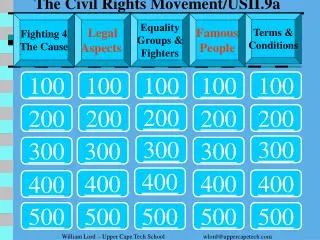
Definitions Carbohydrate Lipids Proteins Hodge-podge 100 100 100 100 100 200 200 200 200 200 300 300 300 300 300 400 400 400 400 400 500 500 500 500 500 Final Jeopardy
ANSWER: This is the structure of an amino acid QUESTION: What is a central carbon with an amino group on one side and a carboxyl group on the other side, a hydrogen bond on the top and a side chain. FINAL JEOPARDY “Structure”
ANSWER: This is a non carbon based molecule QUESTION: What is an inorganic molecule Definitions-100
ANSWER: This is a substance made of the joined atoms of 2 or more different elements QUESTION: What is a compound Definitions-200
ANSWER: These are groups of atoms within a molecule that interacts in predictable ways with other molecules QUESTION: What are functional groups Definitions-300
ANSWER: This is the loss of normal shape of a protein due to heat or other factors QUESTION: What is denaturation Definitions-400
ANSWER: This is the specific reactant acted on by an enzyme QUESTION: What is a substrate Definitions-500
ANSWER: This is the name of a simple sugar, that has jus one sugar unit QUESTION: What is a monosaccharide Carbohydrates -100
ANSWER: The chemical combination of glucose and fructose makes this carbohydrate QUESTION: What is sucrose Carbohydrates -200
ANSWER: This is the polysaccharide found in animals QUESTION: What is glycogen Carbohydrates -300
ANSWER: These are the two polysaccharides found in plants QUESTION: What is cellulose and starch Carbohydrates -400
ANSWER: These are the elements and ratio for all sugars QUESTION: 1 Hydrogen: 2 Carbon: 1 Oxygen Carbohydrates -500
ANSWER: This is the scientific term for a molecule that is water avoiding QUESTION: What is hydrophobic Lipids -100
ANSWER: This is the type of fat that has the maximum number of hydrogen bonds and is usually a solid at room temperature QUESTION: What is a saturated fat Lipids -200
ANSWER: This type of lipid has a carbon skeleton with fused 4 rings QUESTION: What is a steroid Lipids -300
ANSWER: These are the 2 types of steroids that are also male and female hormones QUESTION: What are estrogen and testosterone Lipids -400
ANSWER: This is the structure of a lipid QUESTION: What is a glycerol backbone with 3 fatty acids attached Lipids -500
ANSWER: Only 20 of these monomers that make up the polymers of life QUESTION: What are Amino acids Protein -100
ANSWER: This is the name for linked amino acids QUESTION: What is a polypeptide chain Proteins -200
ANSWER: This is the reaction that occurs to form a polypeptide chain QUESTION: What is dehydration reaction Proteins -300
ANSWER: This is the protein found in hair and nails QUESTION: What is keratin Proteins -400
ANSWER: These 2 factors affect how enzymes function QUESTION: What are pH and temperature Proteins -500
ANSWER: This is the “start-up” energy required for chemical reactions to occur QUESTION: What is activation energy Hodge-poge -100
ANSWER: These are the 4 functional groups QUESTION: What is hydroxyl, carbonyl, carboxyl, amino Hodge-Poge -200
ANSWER: This is the reaction that occurs in the breaking of a polymer QUESTION: What is hydrolysis Hodge-Poge -300
ANSWER: Throw-backs: These are the amount of electrons held in the first, second and third energy levels (tell me how many in each) QUESTION: What is 2 in the first, 8 in the second 18 in the third Hodge-Poge -400
ANSWER: These are the 4 elements that make up 96% of human body mass QUESTION: What is oxygen, hydrogen, nitrogen and carbon Hodge-Poge -500
Jeopardy Rules • Answer in the form of a question • Or its wrong (minus points) • Wrong Answers are minus the points • First answer when complete is it, no changing • Ex: Tigers! ..wait what are tigers… • Still wrong!! • Categories who pix • Elect a team captain, only they can raise their hand • Fairness- This is a GAME! Keep it Calm