Understanding Properties and Changes in Matter: Physical vs. Chemical
This overview explains the fundamental differences between physical and chemical properties and changes in matter. Physical properties, such as mass, volume, and density, can be observed without altering a substance's identity, while chemical properties describe a substance's ability to undergo identity changes through reactions. Extensive properties rely on the amount of matter, whereas intensive properties depend on the substance's identity. We also explore physical changes, which alter form but not identity, and chemical changes that transform substances. Key examples and the Law of Conservation of Mass are included.


Understanding Properties and Changes in Matter: Physical vs. Chemical
E N D
Presentation Transcript
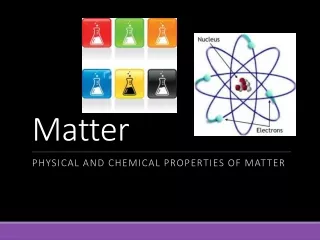
Matter II. Properties & Changes in Matter
B. Physical vs. Chemical • Physical Property • Inherent characteristics that can be observed without altering the identity (composition) of the substance • Chemical Property • describes the ability of a substance to undergo changes in identity by either reacting with something else of decomposition.
Physical Properties • Extensive Property • depends on the amount of matter present • Mass, length, volume • Intensive Property • depends on the identity of substance, not the amount • Density (g/ml), color, melting and boiling points
A. Extensive vs. Intensive • Examples: • boiling point • volume • mass • density • conductivity
B. Physical vs. Chemical • Examples: • melting point • flammable • density • magnetic • tarnishes in air
B. Physical vs. Chemical • Physical Change • changes the form of a substance without changing its identity • Size, shape, phase • properties remain the same • Chemical Change • changes the identity of a substance • products have different properties
B. Physical vs. Chemical • Signs of a Chemical Change • change in color or odor • formation of a gas • formation of a precipitate (solid) • change in light or heat
Law of Conservation of Mass • In a chemical change, there is no change in the total mass of the substances involved. • Mass of Reactants = Mass of Products Mercury(II)Oxide Mercury + Oxygen
B. Physical vs. Chemical • Examples: • rusting iron • dissolving in water • burning a log • melting ice • grinding spices