Merit Function for MOAO Deployable IFUs: A Study from UCO/Lick Observatory
30 likes | 141 Vues
This document presents a detailed study on the merit function for Multi-Object Adaptive Optics (MOAO) deployable Integral Field Units (IFUs), focusing on their efficiency and Strehl ratio metrics. Utilizing data from UCO/Lick Observatory, the study outlines the mathematical framework for assessing instrument performance, considering background light effects and spectral confusion. With applications in astronomical observations, the findings emphasize the importance of optimizing instrumental parameters to enhance line measurement accuracy for celestial objects. Contributions and feedback on the methodology are encouraged.


Merit Function for MOAO Deployable IFUs: A Study from UCO/Lick Observatory
E N D
Presentation Transcript
MOAO vs MCAOTrade Study(Supplementary Material) Donald Gavel UCO/Lick Observatory December 12, 2006
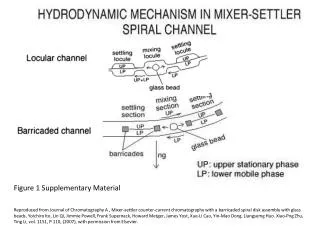
Merit Functionfor MOAO deployable IFU From carlberg@astro.utoronto.ca Thu Jul 22 07:45:11 2004 merit = L * W * N_IFU * sqrt(N_slitlets) * e/sqrt(1+b_ins/b_sky) * S * (1- exp(-S/S_0)), where S_0 ~=0.4 where L = length of accesible sky field W = width of accesible sky field N_IFU = number of deployable IFUs N_slit = number of slitlets in each dIFU e = efficiency b_inst/b_sky = background light added by the instrument divided by the sky background at that lambda S= Strehl, S_0~0.3 The problem with low S is that there is "spectral confusion". The image still has a visible peak, but the spectrum has contributions from a region that is over the size of the seeing disk. This can completely ruin any line measurement where a local strength or velocity is required. The function of Strehl is derived from the brightest super star cluster in the Antennae, redshifted to z=0.3 as shown in the attachment. This case is about the easiest one that can be imagined. A tighter requirement would push S_0 up to about 0.5 or 0.6, but it depends on specific science objects. comments welcomed of course--this is rather back of the envelope. -- Prof. R. Carlberg Department of Astronomy and Astrophysics 60 St. George Street, Toronto, ON M5S 3H8 Canada 416-978-2198 fax: 416-946-7287 cell: 647-886-5991 (tri-band/sms)
MEMS Open-Loop Modeling for“Go-To” Operation • Step 1: Use the thin plate equation to solve for the required plate force distribution • Step 2: Look up the actuator spring force at that displacement • Step 3: Resultant force is the electrostatic force. Look up the voltage that provides that force at that displacement. Open loop control to 15 nm surface demonstrated in the lab. We expect to get better than this with calibration refinement.