Understanding Biomes and Levels of Organization in Ecosystems
Explore the intricate levels of organization within ecosystems, including organisms, populations, and communities. Learn how different species, such as loblolly pines in South Carolina, interact within their habitats. Discover the relationship between biomes and ecosystems, emphasizing the importance of abiotic factors like water and sunlight. Delve into the concepts of niches, food chains, food webs, and energy pyramids, which illustrate the movement of energy and resources. This educational overview highlights the connections between organisms and their environments.

Understanding Biomes and Levels of Organization in Ecosystems
E N D
Presentation Transcript
Biomes Miss Smith
Levels of Organization • Organisms • Populations • all of the individuals of a given species in a specific area or region at a certain time. • members of a population compete for food, water, space, and mates • Ex: loblolly pines in South Carolina
Levels of Organization • Communities • all the different populations in a specific area or region at a certain time • Ex: All of the crabs, seagulls, and sea grass at the beach are part of the same community. • Communities involve many types of interactions among the populations • Some of these interactions involve the obtaining and use of food, space, or other environmental resources.
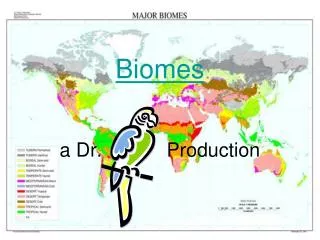
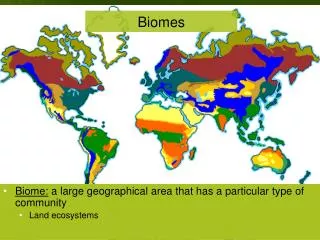
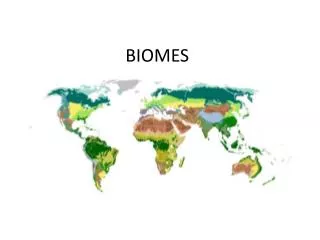
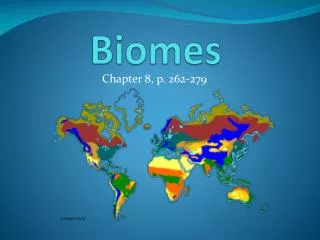
Levels of Organization • Ecosystems • One or more communities in an area and the abiotic factors, including water, sunlight, oxygen, temperature, and soil • Biomes • individual ecosystems grouped together according to the climate and the predominant vegetation and characterized by adaptations of organisms to that particular environment
Specific Places in an Ecosystem • Habitat-place where an organism lives in order to obtain its food, water, shelter, and other things needed for survival • Niche-particular role of an organism in its environment including type of food it eats, how it obtains its food and how it interacts with other organisms • Ex: bee’s niche is to pollinate flowers as it gathers nectar for its food
Food Chains • Use pictures or words and arrows to show the movement of energy through the trophic levels of organisms • The trophic level of an organism indicates the position that the organism occupies in the food chain-what it eats and what eats it • The levels are numbered according to how far the particular organism is along the chain from the primary producer at Level 1, to herbivores Level 2 to predators Level 3, to carnivores or top carnivores Levles 4 or 5
Food Webs • Describe the organisms found in interconnecting food chains using pictures or words and arrows • food webs describe the complex patterns of energy flow in an ecosystem by modeling who consumes whom or what
Energy pyramids • show the amount of energy that moves from one trophic level to another in a food chain • the most energy is available at the producer level of the pyramid • Energy availability decreases as it moves up the energy pyramid
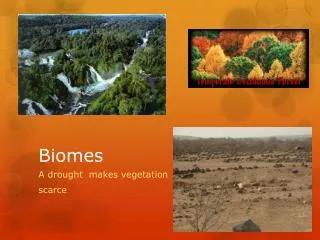
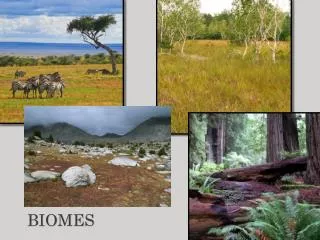
Land Tundra Taiga Forest Grassland Desert Water Freshwater Marine Biomes