The Immune System
This chapter covers the fundamentals of infectious diseases, highlighting how pathogens like bacteria, viruses, and fungi lead to disease transmission. It introduces Robert Koch's postulates for identifying disease pathogens and differentiates between various kingdoms of life, including bacteria and archaea. It also explores the body's immune responses, describing nonspecific and specific immunity, the role of the lymphatic system, and how B-cells produce antibodies. Insights into active and passive immunity are included, emphasizing the importance of these concepts in health and disease prevention.

The Immune System
E N D
Presentation Transcript
The Immune System Chapter 37 1
37.1 Infectious Diseases • Infectious disease – caused when a pathogen is passed from one organism to another. • Pathogens – agent, such as a bacterium, virus, protozoan, or fungus, that cause disease • Remember: not all bacteria, virus, protozoa, and fungi are bad for you.
Identifying Disease Pathogens • Robert Koch – a German physician in 1800s who identified the pathogen for Anthrax.
Koch’s Postulates • Postulate 1 – isolate the pathogen • Postulate 2 – grow the pathogen in isolated media.
Koch’s Postulates • Postulate 3 – Inject the isolated pathogen into a host. The pathogen must cause the same disease or symptoms.
Koch’s Postulates • Postulate 4 – Isolate pathogen from the new host. Grow in isolated media. Pathogen should have the same characteristics as before.
Kingdoms • Bacteria – unicellular prokaryotes • Archaea – unicellular prokaryotes (extremophiles) • Protista – unicellular or multicellular eukaryotes • Fungi – decomposers with cell walls • Plantae – multicellular autotrophs • Animalia – multicellular heterotrophs with motility
Characteristics of Bacteria • Shape • Cell Wall Composition
Bacteria Shapes • Cocci – round • Bacilli – elongated rods • Spirochete – spirals
Cell Wall Characteristics • Gram Positive – stain dark purple due to peptidoglycan • Gram Negative – stain pink due to the presence of a lipid layer
Transmission • Direct contact – touch • Indirect contact by objects – door knobs • Indirect contact via air – sneeze • Vectors – mosquitoes
Nonspecific Immunity • Nonspecific Immunity – this is your bodies defense. • Barriers – block pathogens from entering the body. • Cellular Defenses – protect cells from the spread of pathogens.
Barriers • Skin – provides a physical barrier • If the skin is broken, it will bleed or ooze which forces contaminants out • Some organisms live symbiotically on our skin . They digest the oils & produce acids that deter harmful bacteria.
Barriers • Chemical Barriers • Lysozyme (found in saliva, tears, and nasal secretions) break down bacterial cell walls (destroying the bacteria’s defense). • Mucus blocks bacteria from sticking to the inner epithelial cells • HCl in your stomach kills many microorganisms found in food that could cause disease.
Cellular Defenses • Phagocytosis – white blood cells surround and ingest microorganisms
Interferon • Virus infected cells produce interferon. • Interferon binds to the outside of the neighboring cells. • The presence of interferon on uninfected cells stimulates the production of antiviral proteins. • This prevents the spread of the virus.
Inflammatory Response • Inflammatory response is a complex reaction to invasion that enhances the body’s ability to fight infection. • After tissues are damaged by pathogens, chemicals are released. • These chemicals attract phagocytic cells, increase blood flow, make blood vessels more open to the movement of white blood cells. • Symptoms include pain, heat, & redness.
Specific Immunity • If a pathogen breaks through the body’s defenses, then you need to have a good offensive line.
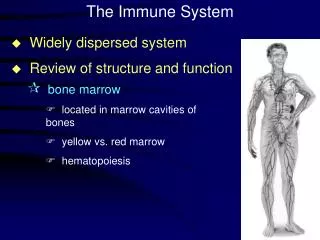
Lymphatic System • Lymphatic system – includes the organs and cells that filter lymph and blood and destroy microorganisms. • Lymph – the fluid that leaks out of capillaries to bathe body cells. • This fluid circulates among tissue cells, drains into lymphatic vessels, and is returned to veins near the heart.
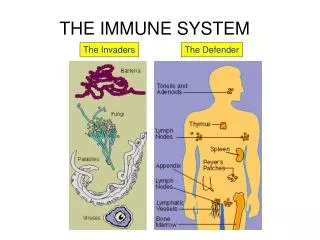
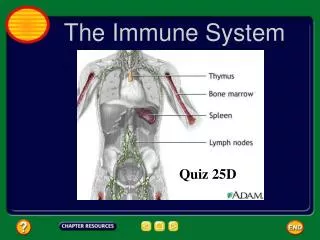
Lymphatic Organs • Lymphocytes – a type of white blood cells that are produced by red bone marrow. • Lymph nodes – filter and remove foreign matter from the lymph. • Tonsils – a protective ring of lymphatic tissue between the nasal and oral cavities.
Lymphatic Organs • Spleen – stores blood and destroys damaged red blood cells. • Thymus gland – stores and matures a special type of lymphocyte called the T cell. • Lymphatic vessels – connect the lymphatic system to the rest of the body.
B Cell Response • B-Cell – a type of lymphocyte that produces antibodies • B-Cells are found in all lymphatic tissues. • Antibodies – proteins, produced by B-cells, that reacts to specific foreign bodies (called antigens). • Antigen – a foreign substance that causes an immune response.
Passive Immunity • Passive immunity – when antibodies are made by someone else and transferred to you. • Example: breast milk & tetanus shot
Active Immunity • Active immunity – the immune system is exposed to disease antigens and memory cells are produced. • Memory cells – long living cells that are ready to respond rapidly if you are exposed to the same pathogen again. • Example: chicken pox exposure or immunizations
Genetic disorders • Genetic disorders – disease caused by the inheritance of genes tha tdo not function properly. • Example: Sickle Cell Anemia, Huntington disease, Coronary Artery Disease
Degenerative Diseases • Degenerative diseases – are the result of the body wearing out. • Example: Degenerative arthritis & arteriosclerosis
Metabolic Diseases • Metabolic diseases – result from an error in a biochemical pathway. • Examples: Type 1 & 2 Diabetes
Cancer • Cancer – abnormal cell growth
Inflammatory Disease • Inflammatory disease – the body produces an inflammatory response to a common substance. • Examples: allergies & autoimmune diseases • Autoimmune disease – the immune system fails to recognize “self” • Examples: Lupus & Multiple Sclerosis
Immunology Lab • http://www.hhmi.org/biointeractive/vlabs/
Staying Healthy • Wash Your Hands • Don’t Drink After Each Other • Finish Antibiotics • Supplements: Vitamin C, Yogurt, Zinc (in pumpkin seeds) • Stress management