
SlideServe
Menu
Préférences
© SlideServe · v2026

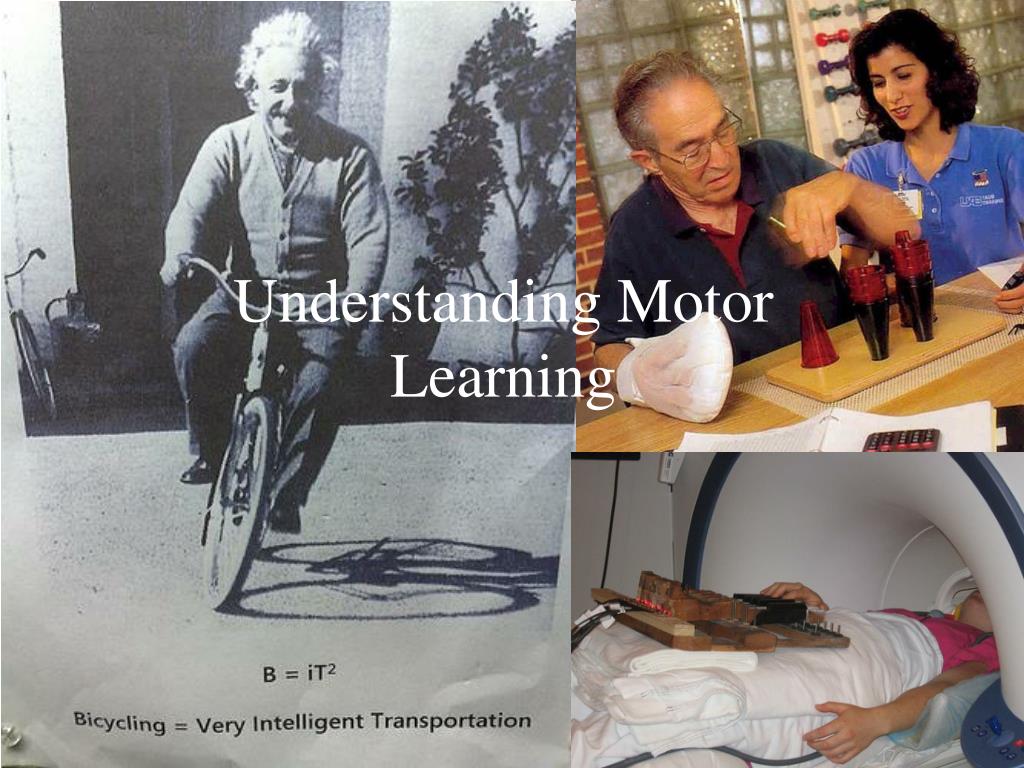
Understanding Motor Learning

cody avatar
30 diapositives · 609 Views · Oct 11, 2014

Understanding Motor Learning. Performance versus Learning. Performance - observable behavior efficiency or precision of a movement Learning - inferred from performance a relatively permanent improvement in performance as a result of practice. Transfer Paradigm.
Understanding Motor Learning - slide 1
01 / 30Understanding Motor Learning
1 / 17

Télécharger la présentation

Understanding Motor Learning
Une image / un lien ci-dessous est fourni (tel quel) pour télécharger la présentation

Politique de téléchargement : le contenu du site vous est fourni TEL QUEL pour votre information et votre usage personnel ; il ne peut être vendu, concédé sous licence ni partagé sur d’autres sites sans l’accord de son auteur.Le contenu vous est fourni TEL QUEL, pour votre information et votre usage personnel uniquement. Téléchargez la présentation en cliquant sur ce lien. Lors du téléchargement, si vous ne parvenez pas à télécharger une présentation, l’éditeur a peut-être supprimé le fichier de son serveur.Pendant le téléchargement, si vous ne parvenez pas à obtenir une présentation, le fichier a peut-être été supprimé par l’éditeur.

F I N

Plus de contenu associé

Transcription de la présentation
  1. Understanding Motor Learning

  2. Performance versus Learning • Performance - observable behavior • efficiency or precision of a movement • Learning - inferred from performance • a relatively permanent improvement in performance as a result of practice

  3. Transfer Paradigm important for assessing “relative permanence” of information or what we might commonly refer to as learning • adequate retention interval • test on common level of the independent variable

  4. Behavioral changes associated with motor learning ? • behavior is more accurate • behavior is faster • behavior is more consistent • behavior is persistent • behavior is adaptable (maybe) • behavior is economical

  5. Behavior is more accurate (expert-novice) volleyball players with tennis task

  6. Behavior is faster

  7. Behavior is stable

  8. Behavioral Stability

  9. Behavior is persistent

  10. Behavior is adaptable (maybe) Effector Independent Effector dependent (Verwey & Wright

  11. Performance is economical

  12. Behavior is economical Wright & Kemp, 1992

  13. Stages of Learning (Fitts & Posner) • Cognitive Stage • Associative Stage • Autonomous Stage

  14. Stages of Learning (Karni, 1995) • Fast Stage • Rapid Improvement in one (or few) session of practice • Intermediate Stage • Memory Consolidation (6 hrs) • Slow Stage • May occur over weeks or months (maybe longer)

  15. Stages of Learning

  16. Types of Motor Learning • Sequence Learning (phone number, golf swing)

  17. Types of Motor Learning • Visual-Motor and Dynamic Adaptation (in space, in rehabilitation)

  18. Motor Adaptation: Setup Shadmehr & Brashers-Krug, The Journal of Neuroscience, 1997, 17(1):409–419

  19. Motor Adaptation: Results Shadmehr & Brashers-Krug, The Journal of Neuroscience, 1997, 17(1):409–419

  20. Motor Adaptation: An illustration Brashers-Krug et al., (1996) Nature, 382, 252-255

  21. Neural Changes with Learning • Processes • Regions • Activation Level • Structural Changes

  22. Changing neural contributions during learning Controlled Automatic Cognitive Motor Spatial Prefrontal Pre-SMA Parietal Premotor M1 Cerebellum (posterior) Cerebellum (Anterior) Temporal K.Sakai et al. (2004). TRENDS in Cognitive Sciences, 8 (12), 547-553 J. Doyon et al. / Behavioural Brain Research 199 (2009) 61–75

  23. FAST SLOW

  24. Changing neural contributions during learning: Explicit • Early: Acquisition • Bi-lateral in nature* • Posterior • BG: Dorso-medial striatum (associative) • Cerebellump • Hippocampus • DLPFC

  25. Changing neural contributions during learning: Explicit • Late: Recall • Unilateral • Anterior • BG: Dorsolateral striatum (motor) • M1 • Premotor • S1

  26. BG and Cerebellum: Learning Basal Ganglia Early vs. Late Anterior vs. Posterior Unilateral vs. Bilateral Cerebellum

  27. Structural Changes during Learning?

  28. Structural change with learning? Pascual-Leone, A. et al. (1995) JOURNALOFNEUROPHYSIOLOGY , 74(3), 1037-1045