Download
1 / 14
140 likes | 254 Vues
This overview delves into the rich tapestry of Byzantine art, tracing its evolution from Greco-Roman influences to its unique 2-D forms that emphasize spirituality over physicality. Key discussions include the impact of Iconoclasm, the veneration of icons like the Virgin Hodegetria, and significant artworks such as the Column of Marcus Aurelius and the Hagia Sophia. The exploration highlights the intricate symbolism, medium choices, and the cultural shifts during the Byzantine Empire, enhanced by a focus on realism and abstraction.

E N D
Byzantine Art Overview and Close Reading
Abstraction Illusionism Medium SymbolismStasis/Dynamism Realism Terms for Close Reading
Greco-Roman (or Classical) Art Discus-Thrower, Greece C. 450 B.C.E.
Greco-RomanArt Column of Marcus Aurelius 193 C.E.
Transition to Byzantine Art Diocletian Reform: Tetrarchy (315 C.E.)
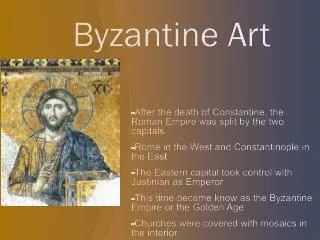
By 5th Century, 3 dimensional sculpture no longer produced. Byzantine art is interested in 2-D surfaces Expresses spirituality, de-emphasizes the body Christ from Hagia Sofia
Iconoclasm Controversy • Icon – 2-dimensional image of holy figure • Church permits starting 3rd Century • Iconoclasts: images = idolatry. • 730 Emperor Leo III calls for destruction of all icons. • Islam’s victories motivate iconoclasts • Conflict in Byzantine Empire for 100+ years. • Strain between Rome and East Great Schism of 1054
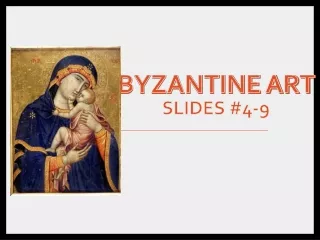
The VirginHodegetria • “Wayshower” • Mary’s hand indicates path to salvation • Jesus’ gesture is one of blessing; thumb over forefingers symbolic of Trinity • An icon form duplicated endlessly • Gold-fringed purple mantle indicates imperial status
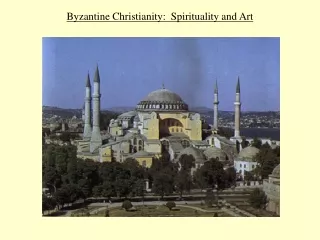
Hagia Sophia • Built 532-537 CE • Largest cathedral in the world for 700 years • Justinian: “Solomon, I have surpassed thee.” • Later a mosque (minarets), now museum
Metalwork • Double sided pendant • Mary (opposite side, Jesus) • 12th Century • Materials reflect wealth of society