The Civil War: Southern Ascendancy and Northern Actions in 1861
This overview examines the early stages of the Civil War, focusing on the South's initial advantages and the decisions made by President Lincoln to address immediate crises. Key events include the declaration of martial law in Maryland to secure Baltimore, the development of the Anaconda Plan by General Winfield Scott, and the significance of the Battle of Bull Run. The Union's early overconfidence leads to a defeat at Bull Run, showcasing the challenges of leadership and strategy faced by the North as it attempts to maintain the Union.


The Civil War: Southern Ascendancy and Northern Actions in 1861
E N D
Presentation Transcript
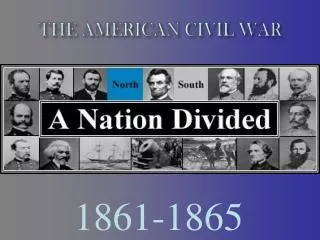
Civil War –Act One Southern Ascendancy
Northern Action • Lincoln deals with immediate problems: • Sending troops into Maryland (A Slave State) to secure Baltimore. • Martial Law declared, habeas corpus is suspended. • As a result Missouri and Kentucky stay in the Union.
The Anaconda Plan • Developed by General Winfield Scott • Naval Blockade of Southern ports (shut down industry and starve them). • Divide South into three sections and conquer them one by one. • Richmond, Virginia • Appalachian Mountains • The Mississippi
Manassas – Bull Run • July 28, 1861 – Union attempt to take Richmond Virginia. • Union soldiers and population were overconfident, citizens followed the army out to the battle, thinking it would be a “fun” outing. • Union attack falls apart, Confederate counter-attack led by Stonewall Jackson routs Union Soldiers, who flee back to Washington DC in a very unorganized fashion.
Northern Doubts • Most of the qualified military leadership defected to the Confederacy at the beginning of the war. – Robert E. Lee. • The Union Generals that were left, were incompetent and well past their prime. • Early defeats left Washington DC almost defenceless.