Understanding Ecosystems: Components, Relationships, and Population Dynamics
An ecosystem encompasses all living and nonliving components in a specific area, including forests, deserts, and coral reefs. It consists of abiotic factors like sunlight and water, and biotic factors such as plants and animals. Key terms include habitat, population, and community. Population density measures how individuals relate to their environment. The relationships within ecosystems, such as mutualism, commensalism, and parasitism, describe how species interact for resources. Understanding these connections is crucial for environmental balance and sustainability.

Understanding Ecosystems: Components, Relationships, and Population Dynamics
E N D
Presentation Transcript
ECOSYSTEMS CHAPTER 10
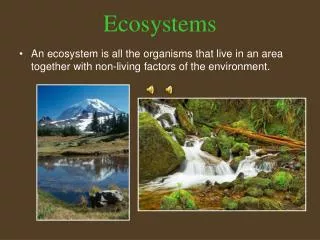
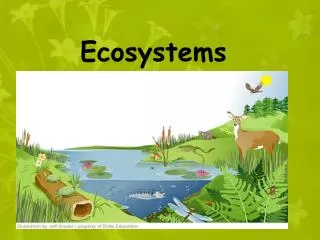
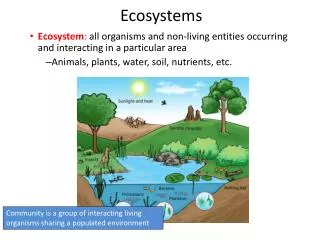
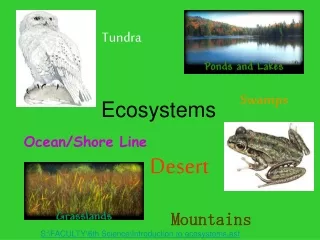
WHAT IS AN ECOSYSTEM? • An ecosystem is all the living things and nonliving things in a given area • Examples of ecosystems: • Forests, deserts, grasslands, rivers, beaches, and coral reefs
Abiotic Vs. Biotic Factors • Abiotic factors: the nonliving parts of an ecosystem • Ex. Sunlight, temperature, air, water, soil • Biotic factors: the living OR once-living things in an ecosystem • Ex. Bacterium, dead organisms(fallen leaves), decayed plant matter in soil, people, animals, trees, etc
Parts of an Ecosystem Habitat: the place within an ecosystem that provides food, water, shelter, and other biotic and abiotic factors that an organism needs to survive and reproduce Population: All the organisms of the samespecies that live in the same area at the same time Community: ALL of the populations living in the SAME area at the SAME time
Too Many Fish in the Sea? • How can you determine if an area contains too much of something? You could calculate the population density! • Population Density: the size of a population compared to the amount of space available • POPULATION DENSITY: number of individuals unit area or volume of space
Lesson 2 Relationships Within Ecosystems Niche: the way a species interacts with abiotic and biotic factors to obtain food, find shelter, and fulfill other needs Symbiosis: a close, long term relationship between two species that usually involves an exchange of food or energy
Types of Symbiosis • Mutualism: when both organisms benefit • Ex. Fish and cleaner shrimp-fish get cleaned and cleaner shrimp get food Commensalism: when one organism benefits but the other neither benefits nor is harmed Ex. Moss growing on a tree. Moss benefits because it has somewhere to grow. Parasitism: One organism benefits and the other is harmed Ex. Wasp lays eggs inside a caterpillar’s body. The eggs hatch and the larvae chew through the body and kill the caterpillar