Evidence Supporting Plate Tectonics: Earth's Structure and Geologic Activity
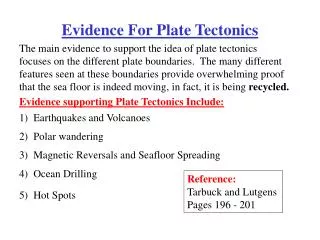
Plate tectonics is a fundamental theory in geology, explaining the movement and interaction of Earth's rigid lithosphere plates. These plates float on the ductile solid asthenosphere, and their margins are sites of most geological activity, including earthquakes and volcanoes. This evidence encompasses the Earth's interior structure—solid inner core, liquid outer core, liquid lower mantle, and more. Key supporting concepts include continental fit, fossil distribution, glacial deposits, and seafloor spreading, measured through radiometric dating and paleomagnetism. Overall, plate tectonics influences Earth's geological processes and history.

Evidence Supporting Plate Tectonics: Earth's Structure and Geologic Activity
E N D
Presentation Transcript
By state inner core - solid outer core - liquid lower mantle - ductile solid asthenosphere - ductile solid lithosphere - rigid solid Earth’s Interior • By composition • core - Fe & Ni • mantle • crust lithosphere asthenosphere
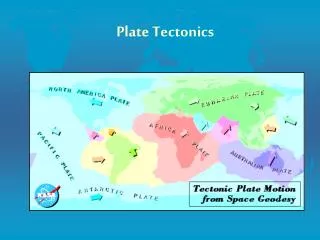
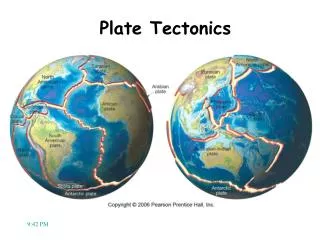
Plate Tectonics • The earth’s surface is made of plates that move and interact. • plates are rigid lithosphere • most activity is at the margins of the plates • the plates are the surface
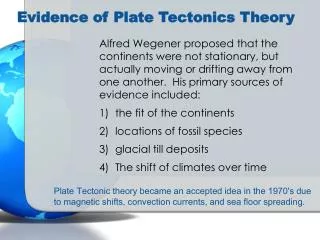
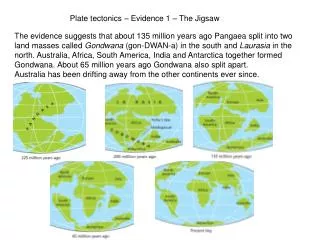
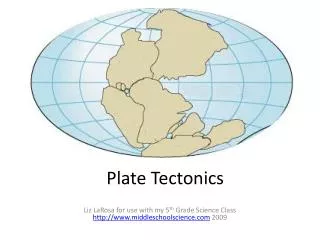
Fossil distribution Fit of the Continents • Igneous & sedimentary rocks • geologic structures Glacial Deposits
Seafloor Spreading Shape of the seafloor Age of the seafloor (measured with riometric dating, paleomag, sed thickness)
Locations of Geologic Activity earthquakes volcanoes
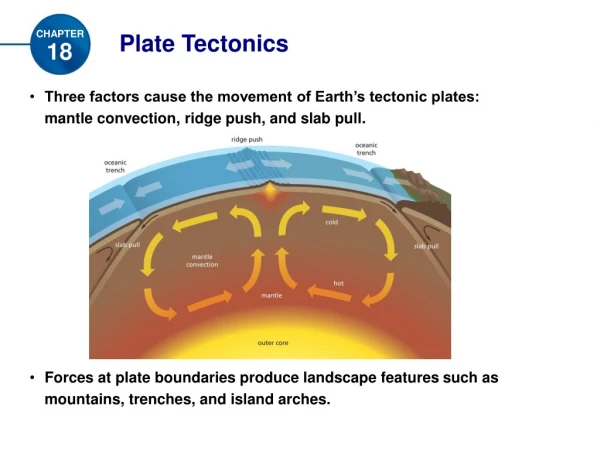
Causes of Motion • mantle motion • slab pull • ridge push