Understanding Cell Sizes: Comparing Amebas to Human Body Cells
In this activity, we explore the sizes of different cells, starting with an ameba, a sizable single-celled organism measuring about 1 millimeter (mm) long. We then measure our own height in meters and convert it to millimeters to see how many amebas would stack up to our height. Lastly, we examine the size of human body cells, which are approximately 0.01 mm long, and calculate how many of these cells would be needed to achieve the same height. This exercise highlights the vast differences in cell sizes within living organisms.

Understanding Cell Sizes: Comparing Amebas to Human Body Cells
E N D
Presentation Transcript
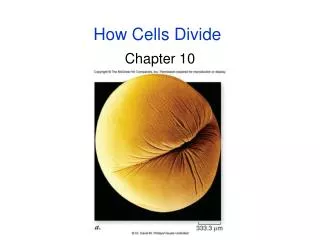
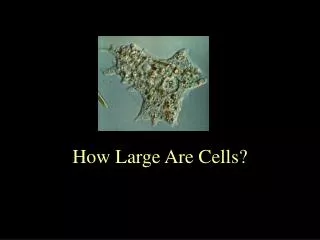
Step One • Look at the organism in the photo. The organism is an ameba, a large single-celled organism. This type of ameba is about 1 millimeter (mm) long. 1 mm
Step Two • In your lab groups, use the measuring tape to measure your height in meters (m) to the nearest tenth (.1). • Multiply your height by 1,000 to get your height in (mm). How many amebas would you have to stack end-to-end to equal your height?
Step Three Many of the cells in your body are about 0.01 mm long—one hundredth the size of an ameba. How many body cells would you have to stack end-to-end to equal your height?