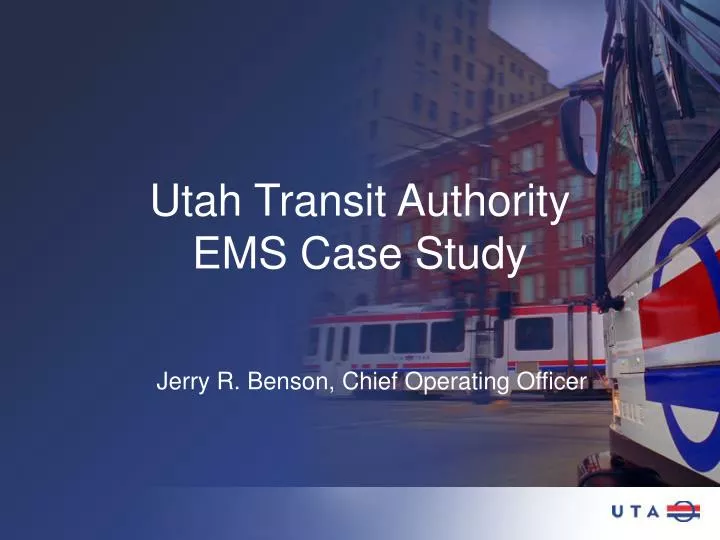

Utah Transit Authority EMS Case Study
E N D
Presentation Transcript
Utah Transit AuthorityEMS Case Study Jerry R. Benson, Chief Operating Officer
UTA Carries 40 Million Passengers Per Year on Bus, Rail, Van and Paratransit
UTA Statistics • 2000 employees • 1600 square miles of service area • 650 buses and paratransit vans • 90 rail vehicles • 500 vans • 8000 bus stops • $200 million operating budget
ISO 14001 • UTA Selected as one of ten transit agencies to participate in federally funded ISO 14001 program. • As the ISO 14001 team learned about ISO management systems, it became clear that the ISO framework was a perfect fit for UTA.
Major Drivers for EMS • Environmental awareness • Oily waste water • Incentive from FTA • Decentralized structure brought risks • Enormous growth anticipated • Public support
UTA Became First ISO 9001 and ISO 14001 Certified Transit Agency in December 2005
Aspects • Printing (Employee Exposure & Disposal) • Industrial Waste Water Treatment • Used Oil Management • Recycling Used Oil Filters • Fuel Consumption & Excessive Idling • Paint Related Waste: Aerosol Cans & Other Paint Products • Energy Conservation • Recycling
Air Quality • CO2: 3.037 million lb/yr • NOx: 91,125 lb/yr • PM: 2484 lb/yr • Fuel: $675,000.00 • Labor: $63,000.00 2005-2006Vehicle Idling and Emissions Savings
Contractor Management • Inventory current contractors – inform them about UTA EMS. • Identify contractor gatekeepers – purchasing, security, project managers. • Make gatekeepers responsible. • Audit. • Use nonconformity process.