Overview of Solar System Planets
Explore the characteristics and unique features of the planets in our Solar System including Mercury, Venus, Earth, Mars, Jupiter, Saturn, Uranus, Neptune, and Pluto.
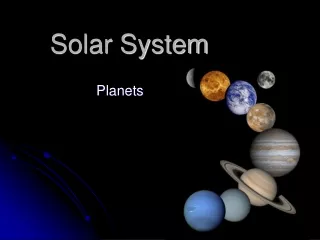

Overview of Solar System Planets
E N D
Presentation Transcript
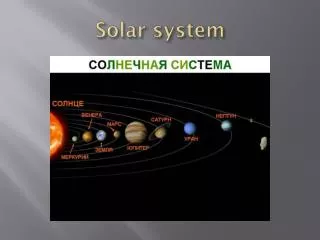
Solar System Planets
Mercury • The first planet from the sun • Mercury is a small, rocky planet. • It has a dusty surface filled with craters
Venus • The second planet from the sun • Venus is almost he same size as Earth. • It is a dry, hot planet with tall mountains and deep valleys.
Earth • The third planet from the sun • The Earth is a ball of rock almost covered by oceans • As far as we know, it is the only planet with air we can breathe
Mars • The fourth planet from the sun • Mars is about half the size of Earth • It is a desert except for the ice caps at the north and south poles
Jupiter • The fifth planet from the sun • Jupiter is the largest planet in the solar system • Jupiter is a giant ball of gas with a small rocky center
Saturn • The sixth planet from the sun • Saturn is the second largest planet • The rings that orbit the planet are made of bits of ice and rock
Uranus • The seventh planet from the sun • Uranus is a giant gas ball with a rocky center • Uranus tilts over on its side
Neptune • Neptune is a large blue green ball of gas with a center of rock and iron • Neptune has faint rings • Neptune has high winds and many storms that sometimes show up as dark spots
Pluto • Pluto is the smallest planet • It is the coldest spot in the solar system • Pluto’s orbit travels around the sun in a different path than the other planets