Trends and Strategies in HIV Prevalence and Prevention in Thailand (2005-2009)
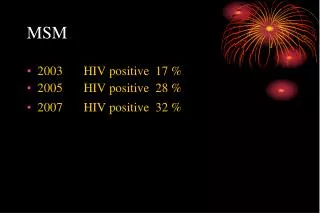
This report highlights the increasing HIV prevalence among men who have sex with men (MSM) in Thailand, with rates rising from 17% in 2003 to 32% in 2007. It also examines HIV seroprevalence among Royal Thai Army conscripts from 1991 to 2009 and the incidence rates during this period. Additionally, the document discusses the importance of pre-exposure prophylaxis (PrEP) and other biomedical strategies for enhancing HIV prevention efforts. The findings underscore the need for a comprehensive approach to tackle the HIV epidemic effectively.

Trends and Strategies in HIV Prevalence and Prevention in Thailand (2005-2009)
E N D
Presentation Transcript
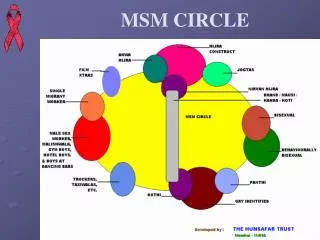
MSM • 2003 HIV positive 17 % • 2005 HIV positive 28 % • 2007 HIV positive 32 %
HIV prevalence among MSWBangkok, Chiang Mai and Phuket, 2005–2007
HIV-1 Seroprevalence of Royal Thai Army Conscripts, 1991-2009 Percent Seroprevalence Year Sources: Army Institute of Pathology Armed Forces Research Institute of Medical Sciences, RTA
HIV-1 Incidence among RTA Conscripts from 2005 – 2009 Sources: Armed Forces Research Institute of Medical Sciences, RTA
HIV Incidences at Time of Entry into Royal Thai Army, 2005-2009 Sources: Armed Forces Research Institute of Medical Sciences, RTA
Median HIV Prevalence and BED Adjusted Incidence among ANC Pregnant Women in Sentinel Provinces Median prevalence (% per year) BED adjusted incidence (% per year)
Median HIV Prevalence and BED Adjusted Incidence among Direct Sex Workers Median prevalence (% per year) BED adjusted incidence (% per year)
Median HIV Prevalence and BED Adjusted Incidence among indirect Sex Workers Median prevalence (% per year) BED adjusted incidence (% per year)
11 Improving HIV prevention • Do better with the strategies that we already have • Develop new biomedical technologies to prevent HIV • Adopt a more comprehensive approach to HIV prevention
Turning to antiretrovirals for prevention The use of antiretrovirals for prevention by… HIV-positive individuals to reduce their risk of transmitting HIV Treatment as prevention HIV-negative individuals to reduce their risk of infection Post-exposure prophylaxis (PEP) Pre-exposure prophylaxis (PrEP) 13
What is pre-exposure prophylaxis (PrEP)? • Pre Before (and after) • Exposure When a fluid containing HIV comes into contact with mucous membranes or non-intact skin • Prophylaxis An action taken to prevent infection or disease
How does PrEP work? • Infection does not occur instantly after an exposure to HIV • The virus needs to spread throughout the body • This may take up to 3 days after the exposure • The “window of opportunity” for PrEP • The brief period of time - after an exposure - where HIV has not yet spread throughout the body • During this time, PrEP may be able to stop HIV from causing an infection 15 15