Download
1 / 12
120 likes | 255 Vues
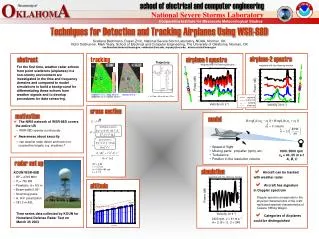
This report presents significant findings from lightning research conducted by the National Severe Storms Laboratory (NSSL) and CIMMS. It details observations of storm electrification, the analysis of OK-LMA data, and the integration of balloon-borne electric field measurements with microphysics. The study emphasizes applications for National Weather Service operations, lightning data assimilation, forecasts, and the physics behind lightning initiation and attachment. Key environmental and in-storm soundings enhance understanding of lightning climatology in the Oklahoma-Texas region.

E N D
Lightning Research at the National Severe Storms Laboratory Don MacGorman1,2, Ted Mansell1, Kristin Kuhlman2, Alex Fierro2, Conrad Ziegler1, Stephanie Weiss2, Dave Rust2 1NOAA/National Severe Storms Laboratory 2CIMMS/Univ. of Oklahoma & NOAA
NSSL/CIMMS Storm Electrification Research • Storm electrification observations • Studies of OK-LMA data • Balloon-borne electric field & microphysics • Applications for NWS operations • Storm tracking & trends by storm type • Lightning data assimilation • Lightning forecasts • Lightning physics (initiation & attachment) • Lightning climatology
Environmental soundings: 39 on 13 days In-storm soundings: Good soundings on 7 days, 2 with Parsival LMA data processed for central OK cluster, working on incorporating all stations with Texas stations DC3 OK-TX Ballooning & LMA Summary
VHF Source Distribution vs Range 0-25 km 125-150 km 75-100 km 175-200 km
2009 March July May September
MCSs: Evolution of Flash Rates Total Flash Rates CG Flash Rates
Peak in Total Flash Rate Relative to Peak in Brightness Temperature Area -52°C: 11 MCSs -60°C: 12 MCSs -66°C: 11 MCSs
Time-Height Plot of VHF Sources & MaxReflectivity Height Maximum Estimated Hail Diameter
Correlation: Max VHF Source Height vs Max Reflectivity Height