The Impact of Digital Media on Writing and Creativity
This compilation discusses the transformation of writing and creativity in the digital age, referencing key authors and theories on technology's influence. From Bolter's examination of print remediation to Carr's concerns about cognitive decline due to internet usage, it explores how platforms like YouTube and blogging redefine authorship and creativity. The works cited offer a historical perspective on these changes, showcasing the collaborative nature of online content and the evolving relationship between readers and writers.

The Impact of Digital Media on Writing and Creativity
E N D
Presentation Transcript
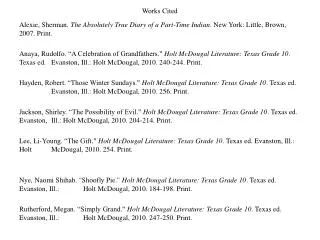
Works Cited • Troy: • 1. www.stumbleupon.com • 2. www.memegenerator.net/ • 3. www.wikipedia.orgBolter, J.D. (2001). Introduction: Writing in the late age of print. Writing space: / Nicholas Carr (2008) The Atlantic, Is Google Making us Stupid? • 4.www.nypl.org/ Page 18, What video games have done to us. Gee J.P. (2007) • 5. Turkle, S. (Jan 1996). Who Am We? Wired. • Kate: • Flatt, Molly. "Cult of Creativity." Http://mollyflatt.co.uk. N.p., 18 July 2012. Web. 26 Feb. 2013. • 2. Kelly, K. (Aug 2005). We Are the Web. Wired. • 3. Rettberg, J.W. (2009). What is a blog?Blogging. Malden, MA: Polity Press. • 4. Wesch, M. (Jun 2008). An Anthropological Introduction to YouTube. Presented at the Library of Congress. YouTube.
Works Cited Continued Maggie: 1. Bolter, J.D. (2001) Writing as technology. Writing space: Computers, hypertext, and the remediation of print. Mahwah, NJ: LEA. 14-26. 2. Kelly, Kevin. (2008, November 21) Becoming Screen literate. The New York Times. 3. Farnell, Chris (2012, September 26) Serial Novels: New Platforms for an Old Format. The Literary Platform 4. Bolter, J.D. (2001). Introduction: Writing in the Late Age of Print. Writing Space: Computers, hypertext, and the remediation of print. Mahwah, NJ: LEA. 1-13. Seth: 1. Gilbert, Elizabeth. “You Elusive Creative Genius.” www.ted.com. February 2009. Web. 26 February 2013. 2. Kelly, Kevin. “Becoming Screen Literate.” 23 November 2008. www.nytimes.com. Web. 26 February 2013. 3. Selfe, Cynthia. “Literacy and Technology Linked: The National Project to Expand Technological Literacy.” 1999. www.williamwolff.org. Web. 26 February 2013. 4. Bush, Vannevar. “As We May Think.” www.theatlantic.com. Web. 26 February 2013.